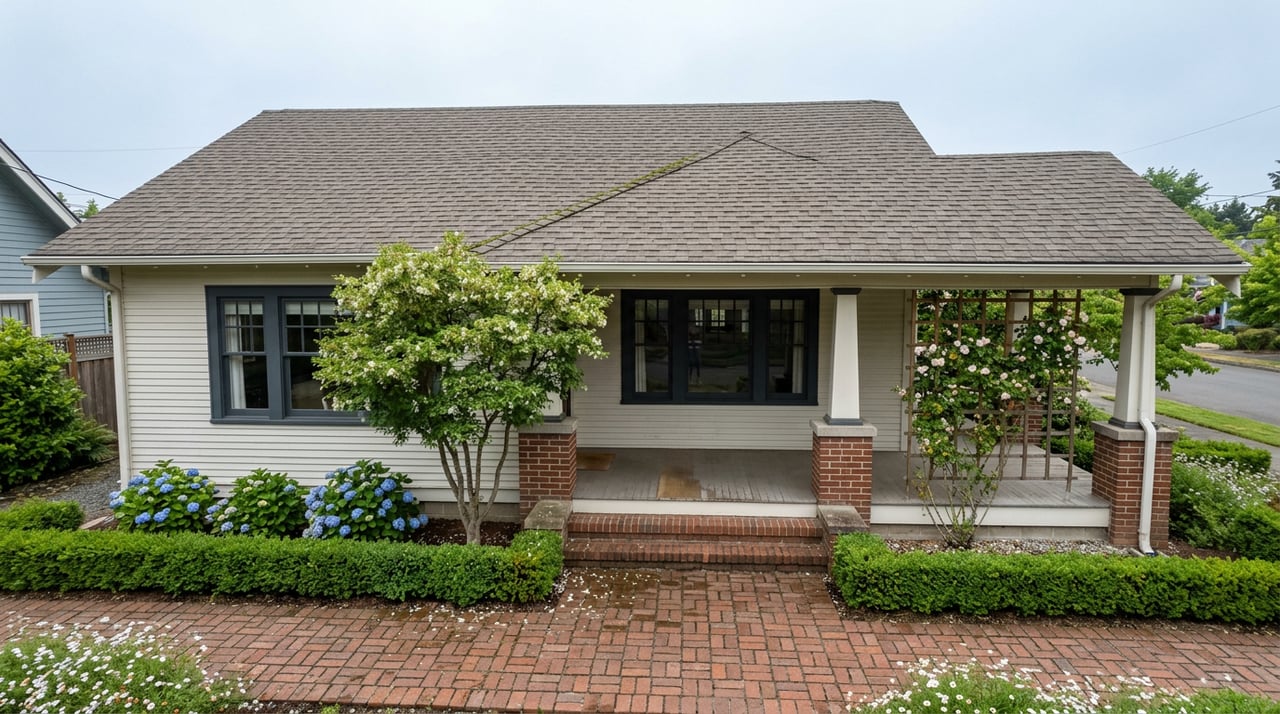
A listing agent writes "Mills Act contract in place" in a property description, and most buyers read it as a done deal: buy the house, keep the tax break, move on. The California Office of Historic Preservation says an existing recorded contract transfers with the property. New contracts have been unavailable since 2025, and as of this writing the city still hasn't said exactly when that changes.
If you're shopping or selling a historic home in Old Towne Orange, that distinction is worth more than the square footage.
What a Mills Act contract actually is
The Mills Act is a state program, not a city one. California enacted it in 1972 to give owners of qualified historic properties a property tax reduction in exchange for a binding commitment to maintain and restore the building according to the Secretary of the Interior's Standards. The City of Orange adopted its own Mills Act program in 1998, and more than 200 properties in Orange currently carry the benefit, most of them concentrated in Old Towne.
A signed contract is recorded against the property and runs on a rolling 10-year term with automatic annual renewal, which means it transfers to whoever buys the house next. That's the part that makes the phrase so useful in a listing. It's also the part that leads buyers to assume the reverse is just as easy: that if the house they want doesn't have one yet, they can apply for their own after closing.
Right now, they can't.
The freeze nobody puts in the listing
The city's own property tax incentives page states plainly that Orange is not presently accepting new Mills Act applications while the program is under review. That review started in 2025. By January 2026, the Old Towne Preservation Association was still telling members that applications remained on hold with no timeline for when they'd reopen.
The freeze got messier before it got clearer. In August 2025, the city sent a letter to Mills Act contract holders that alarmed enough property owners that OTPA, working with the Orange Legacy Alliance, met directly with the Community Development Department to walk it back. The outcome was a plan for a second, more targeted letter aimed specifically at contract holders who are behind on their annual filing fee or otherwise out of compliance, not a blanket notice to everyone in the program. If you're buying a house with an existing contract, that history is a reason to confirm the contract is actually current and in good standing before you count on the contract’s tax benefit applying after the transfer.
Why the freeze exists
This isn't a case of a city department losing track of paperwork. Orange has been rebuilding the entire framework that governs historic properties, and the Mills Act got caught in the middle of it.
In August 2025, the City Council voted 5-2 to direct staff toward an ordinance that would narrow the Design Review Committee's authority to focus primarily on historic districts and inventory-listed properties, moving routine commercial review to staff level. Mayor Fred Slater framed the change as part of a broader push, informed by a Grant Thornton fiscal review, to make Orange more business-friendly and speed up permitting outside historic areas. Preservation groups, including OTPA and the Orange Legacy Alliance, urged caution.
The council approved a first reading of that ordinance on October 28, 2025, by the same 5-2 margin, with Mayor Slater, Mayor Pro Tem Bilodeau, and Councilmembers Tavares, Dimitrio, and Gyllenhammer voting yes, and Councilmembers Gutierrez and Barrios voting no. The ordinance defines a historic property three ways: it sits in an established historic district, it appears on the city's inventory, or it's at least 50 years old and the community development director determines it has historic, architectural, or cultural significance. That third category is new, and it means the pool of properties subject to historic review could grow beyond what current owners expect.
By March 2026, the city's preservation consultant, Chattel Architecture, was presenting a fuller comprehensive ordinance at a public study session. Project manager Debbie Howell Bridal told commissioners that Old Towne Orange is the largest historic district on the National Register in California, and argued the city has a strong foundation to build the new rules on. The draft envisions a local register, a tiered review system meant to speed up routine projects, and a new Historic Resources Committee to replace the Design Review Committee's role in historic matters.
The draft ordinance and revised Mills Act Program Guidelines were finally released for public comment on August 3, 2026, ahead of an August 5 Design Review Committee meeting. According to Foothills Sentry, the local outlet that has covered Orange, Villa Park, and North Tustin since 1969, the city council is expected to adopt the new citywide Historic Register ordinance this month. If that holds, September 2026 is the month the rules that have been frozen in draft form since last year finally become official.
What changes for renovation work either way
Whether or not a property carries a Mills Act contract, the city has already tightened what it expects from anyone touching a historic building. The City of Orange requires applicants proposing additions, new infill construction, or accessory dwelling units on a historic property or within a historic district to submit a historic resource assessment upfront, evaluating existing conditions against the Secretary of the Interior's Standards and the city's own design standards. That report has to come from a preservation professional who meets the Secretary of the Interior's qualification standards, typically pulled from the city's approved consultant list. For anyone converting an accessory structure like a carriage house into livable ADU space, there's an added requirement to document the condition of its siding, framing, windows, doors, and roof before the city will sign off on rehabilitating it rather than requiring a different approach.
The existing design standards haven't gone anywhere in the meantime. Vinyl windows are still prohibited district-wide. Artificial turf is still barred from front and side yards visible from the street. Gravel, mulch, and decomposed granite still don't pass as compatible landscaping in a district built around cottage gardens and low foundation plantings. For a design-conscious seller planning pre-listing improvements, or a buyer eyeing a fixer with plans to expand it, the sequence that works is historic preservation review first, final architectural drawings second, and a building permit last, not the other way around.
What an existing contract is actually worth versus what one might cost you in time
| Scenario | What transfers or applies |
|---|---|
| Home already has a recorded Mills Act contract | Contract transfers with the deed. Buyer inherits the remaining rolling 10-year term and the recorded obligations |
| Home has no contract, buyer hopes to apply after closing | Not currently possible. The city has not accepted new Mills Act applications since the review began in 2025, and no reopening date has been announced as of the August 2026 guidelines release. |
| Any addition, infill, or ADU on a historic property | Requires a historic resource assessment report from a qualified preservation consultant before final design, regardless of Mills Act status. |
What this means at the closing table
If you're selling a home with a Mills Act contract, don't assume the perk is self-evidently intact. Confirm your contract is current and annual fees are paid before you market the tax benefit as a selling point. The Community Development Department's historic preservation staff, reachable through the city, can confirm your standing directly, and it's worth keeping a paper trail of that confirmation for your own records given how the August 2025 letter situation played out.
If you're buying a historic home in Old Towne Orange, treat an existing contract as a real, transferable asset and treat the absence of one as a genuine gap, not a formality you can fix in year one. Watch city council agendas rather than assuming the freeze lifts on any particular timeline.
If you're planning renovation work on a historic property, whether you're improving it to sell or buying it to improve, build the historic resource assessment into your budget and your calendar at the start of the project, not after you've already drawn final plans.
Frequently asked questions
How can I estimate property taxes if I buy a home with an active Mills Act contract? Contact the Orange County Assessor's Special Properties Division for a property-specific estimate before you rely on the seller's current tax bill as a preview of yours.
How can I check whether a home in Old Towne Orange qualifies for a Mills Act contract? Confirm status through the city's Historic Preservation Map or its Historic Preservation Planner before assuming a house qualifies.
Will the new ordinance change which homes count as historic? Likely yes. The draft adds a 50-year catchall category, meaning a building that isn't currently in a historic district or on the inventory could still be pulled into historic review if the community development director determines it has architectural or cultural significance.
Where can I check whether the Mills Act program has reopened? The city has said it will post updates as the new ordinance moves toward adoption. Checking city council agendas directly is currently the most reliable way to track when new applications open back up.
Old Towne Orange rewards patience and precision more than almost any other pocket of Orange County, and right now that's true of the paperwork as much as the porches. If you're weighing a purchase, a sale, or a renovation inside the district while these rules finish taking shape, Real Estate by Cindi can walk through what your specific property qualifies for and what the timing actually means for your plans. Request a design-forward market consultation before you assume the listing description tells the whole story.
This article is general information, not legal, tax or financial advice. Consult a qualified professional about your situation.