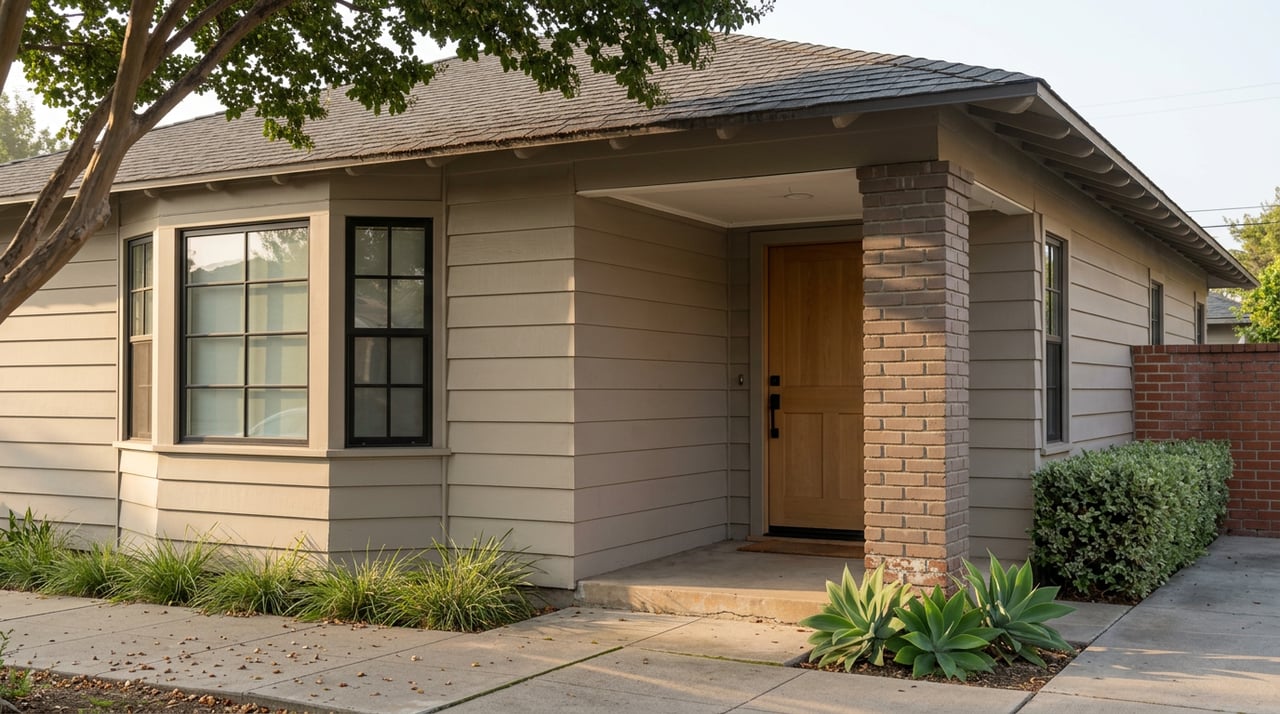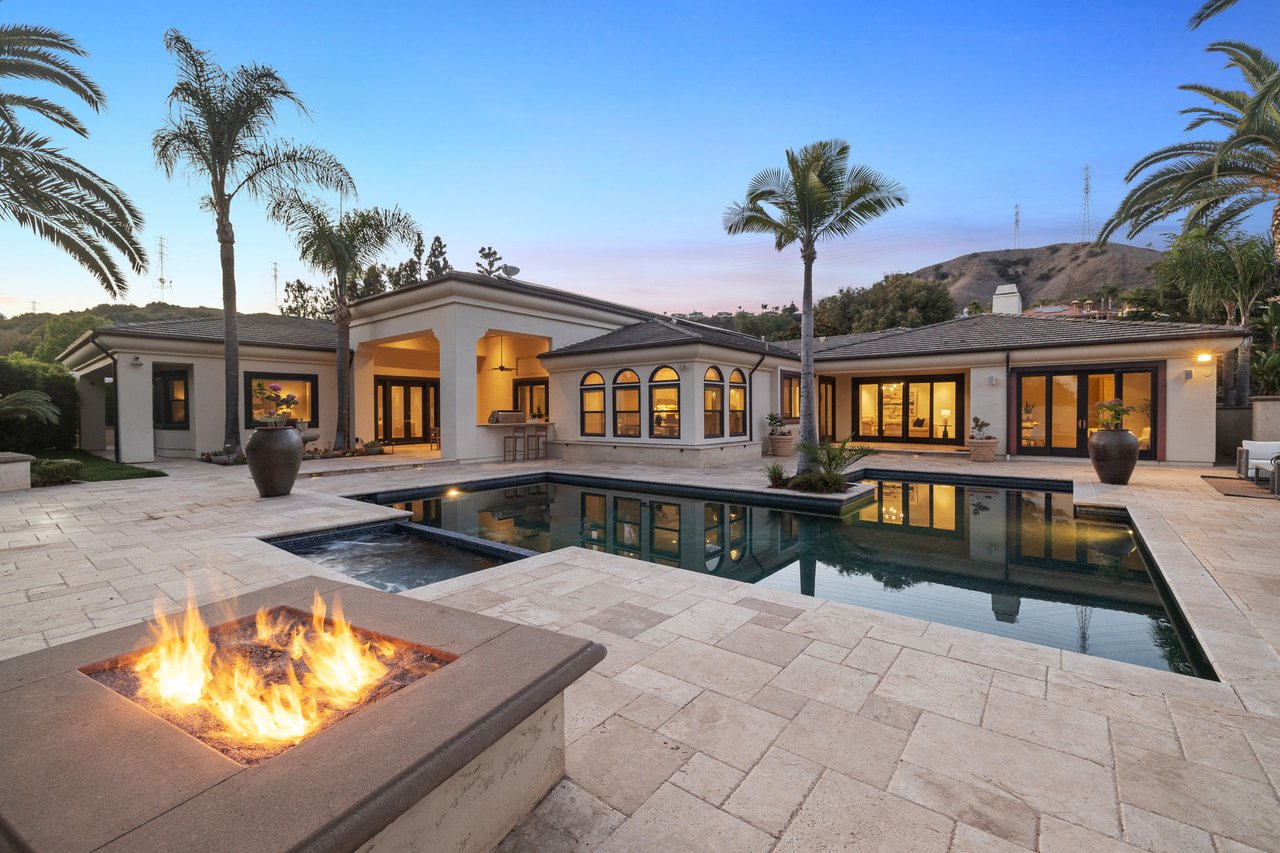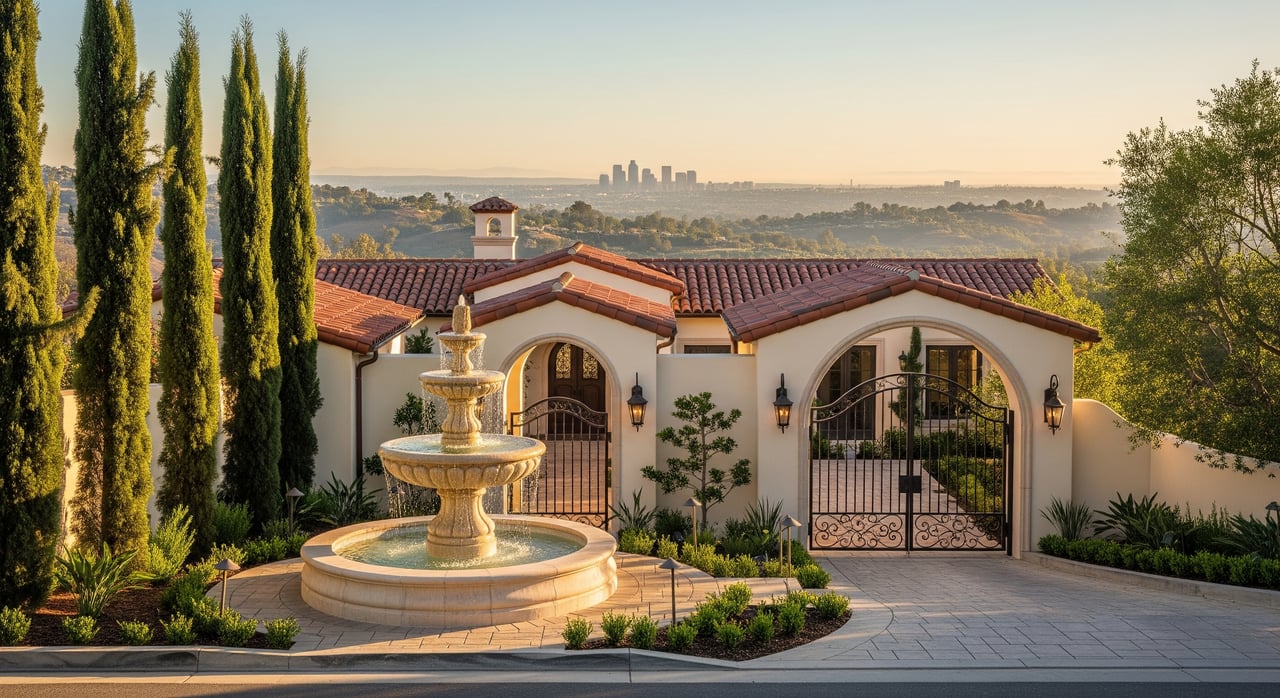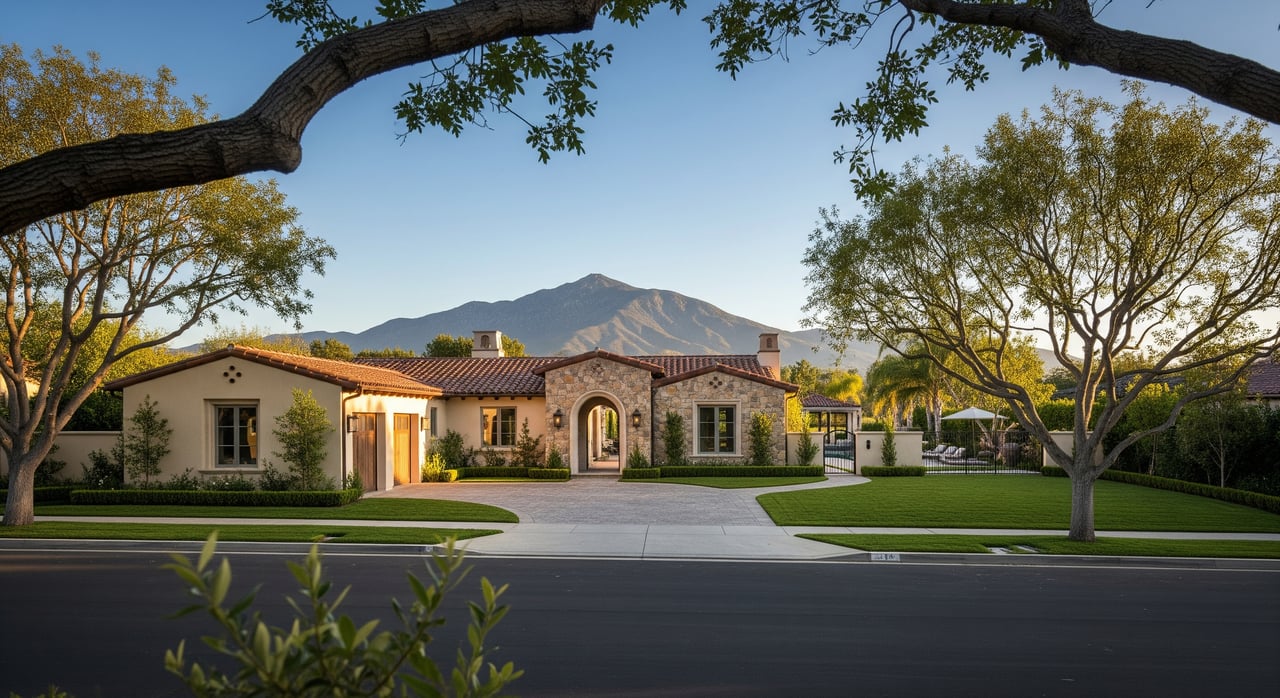
Pull up a handful of active Tustin Ranch listings and you'll find two homes advertised under the exact same neighborhood name that don't describe the same market at all. One is a gated tract home in El Dorado, marketed with no Mello-Roos tax and a low monthly HOA fee as its main selling point. Another sits behind a 24-hour guard gate in Tustin Ranch Estates, the kind of listing that leads with Catalina Island views and a four-car garage.
A buyer scrolling a portal sees both under the same neighborhood name and assumes they're shopping one market with one going rate. They aren't. Tustin Ranch was built and governed as roughly fifteen separate gated tracts stitched around a single golf course, and the "median price" attached to the neighborhood is really an average of homes that never actually compete with each other for a buyer's offer.
The number that looks like an answer
As of August 19, 2026, there were 42 active listings across Tustin Ranch, with a median list price of $1,039,400 and an average of $784.79 per square foot. That figure blends attached condos, tract homes, and gated estate listings into one line.
Look at closed sales instead and the picture shifts hard. Over the three months ending in May 2026, the median sale price in Tustin Ranch was $1.6 million, up 46.7 percent from the same period a year earlier. That figure is built on a thin monthly pipeline: only 30 homes closed in May 2026, barely more than the 29 that closed in May 2025. A jump that size on a monthly volume that small is not a signal that the entire neighborhood repriced itself in a year. It's what happens when a handful of larger, golf-course-adjacent sales land in the same three-month window as a wave of smaller condo closings from the prior year. The median moves because the mix moved, not because every home in Tustin Ranch is suddenly worth half again as much.
This is the trap in treating Tustin Ranch as a single comparable set. A seller who anchors their asking price to a 46.7 percent headline number, or a buyer who assumes the current $1,039,400 median describes what a specific gated tract will cost, is pricing off a blend that was never designed to represent any one property.
One golf course, a dozen separate gates
The reason the math behaves this way traces back to how Tustin Ranch was built. The Irvine Company began planning the community in 1982 on land that had been a citrus ranch, won county approval to build in 1986, and was annexed into the city of Tustin that same year, which is how the area picked up the 92782 ZIP code and a name that has nothing left to do with citrus. Street names still nod to the old ranch, but the ranch itself is gone.
What replaced it wasn't one subdivision. It was a collection of individually platted, individually gated tracts, most built between the late 1980s and mid-1990s, arranged around the Ted Robinson-designed Tustin Ranch Golf Club, an 18-hole course that has been named California Golf Course Owner's Association Course of the Year and repeatedly voted best Orange County golf course and driving range by Orange County Register readers. The course and the surrounding greenbelts are the one thing every tract shares. The governance, the gates, and the price tiers are not shared at all.
Here's a sample of what's actually inside the "Tustin Ranch" label:
| Community | Housing type | Built / established | Gate | What recent listings show |
|---|---|---|---|---|
| Montecito | Attached homes | 1992 (115 units) | Gated | Recent resale activity in the $1M range |
| El Dorado | Single-family | Original 1980s-era tract | Gated | A recent listing near $2.5M for 3,001 sq ft; a separate El Dorado listing marketed no Mello-Roos and a low HOA |
| Tustin Ranch Estates | Custom single-family | Original 1980s-era tract | 24-hour guard-gated | Estate-scale homes above 5,900 square feet |
| Shadow Brook | Single-family | Original tract era | Gated | Recent listing near $1.25M for a 1,598 sq ft home |
| San Miguel | Attached homes | 1993 (138 PUDs) | Gated | Part of the Tustin Ranch III master association |
| The Orchards | Condominium | 1994 (223 units) | Gated | Borders the golf course directly |
| Tustin Villas | Condominium | Original tract era | Gated | Marketed as a move-in ready gated condo community |
The spread inside that table is the whole point. A buyer comparing a Montecito listing to a Tustin Ranch Estates listing isn't comparing two homes in the same market segment that happen to be a few minutes apart. They're comparing an attached 1992 HOA product to a guard-gated custom estate that was never priced to compete with it.
The HOA math nobody adds up front
The layering goes one step further than the gates themselves. Tustin Ranch is organized under multiple numbered master associations, including Tustin Ranch I and Tustin Ranch III, each covering a different cluster of tracts. San Miguel sits inside the Tustin Ranch III master association. The Orchards sits under Tustin Ranch I. Each master association covers the shared entry monuments, common-area landscaping, and greenbelt maintenance that stretch across multiple tracts, while each individual gated community, San Miguel, Montecito, El Dorado, and the rest, runs its own sub-association on top of that for the pool, the spa, private streets, or in the case of a guard-gated tract, the staffing itself.
Recent HOA disclosure filings for Tustin Ranch Community Association III show a median monthly assessment around $395. That figure covers the master association's obligations. It says nothing about what an individual tract layers on top of it. A homeowner in a modest attached community with no shared pool might pay close to that master fee alone. A homeowner in a guard-gated tract is paying that master fee plus a separate sub-assessment that funds a staffed entrance around the clock, which is why one El Dorado listing can advertise "no Mello-Roos and low HOA" as a selling point while a Tustin Ranch Estates listing a mile away carries a materially different total.
None of this shows up when a portal lists a single "HOA fee" field next to a listing price. It shows up in the CC&Rs and the current assessment disclosure, which is exactly the paperwork most buyers don't request until they're already in escrow.
What this actually means for a comparison
If you're pricing a sale or sizing up a purchase in Tustin Ranch, the neighborhood-level median is a starting point at best. What actually determines value is:
- Which of the named gated tracts the property sits in, since each one has its own build era, lot sizes, and resale history that behave more like a distinct micro-market than a subset of a larger one.
- Which numbered master association covers it, since that determines the baseline shared assessment before any tract-level fee is added.
- Whether the tract is guard-gated or simply gated, since staffing an entrance around the clock is a real, ongoing cost that gets built into the sub-association's dues rather than the master fee.
- What the current assessment disclosure actually itemizes, rather than the single HOA number a listing sheet displays, since master and sub-fees are frequently reported separately in the documents a buyer receives during their review period.
- How thin the recent sales sample is for that specific tract, since a neighborhood-wide figure built on a single month of roughly 30 closings can be moved substantially by two or three estate-scale sales landing in the same reporting window.
A design-led approach to preparing a Tustin Ranch listing starts here, not with staging. Knowing which tract you're actually competing against, and pricing off that comparison set instead of the blended neighborhood figure, is what keeps a listing from sitting on the market waiting for a buyer pool that was never shopping in that price range to begin with.
Frequently asked questions
Is Tustin Ranch its own city, or part of Tustin? Tustin Ranch is a planned community inside the city of Tustin. It was annexed into the city in 1986, the same year construction was approved, and carries its own ZIP code, 92782, but it is governed by Tustin's municipal services rather than operating as a separate incorporated city.
Why do two homes in Tustin Ranch sometimes list for such different prices per square foot? Because the gated tracts inside Tustin Ranch were built at different times, to different specifications, with different lot sizes and amenity packages. A 1992 attached-home tract and a guard-gated custom-estate enclave were never built to the same standard, so comparing their price per square foot directly tells you less than comparing each to sales within its own tract.
Does every Tustin Ranch community require HOA approval for changes to a home? Requirements vary by association. Some tracts, particularly older attached-home communities, have more restrictive architectural review than single-family enclaves with larger lots. The specific CC&Rs for the tract in question, not a general assumption about "Tustin Ranch HOAs," are what govern any exterior change.
If you're weighing a purchase or a sale inside one of Tustin Ranch's gated tracts and want the comparison set that actually applies to your address, rather than the neighborhood-wide average, Real Estate by Cindi can walk through the specific master association, sub-HOA structure, and recent comparable sales for your tract. Request a design-forward market consultation to start with the numbers that actually apply to your home.