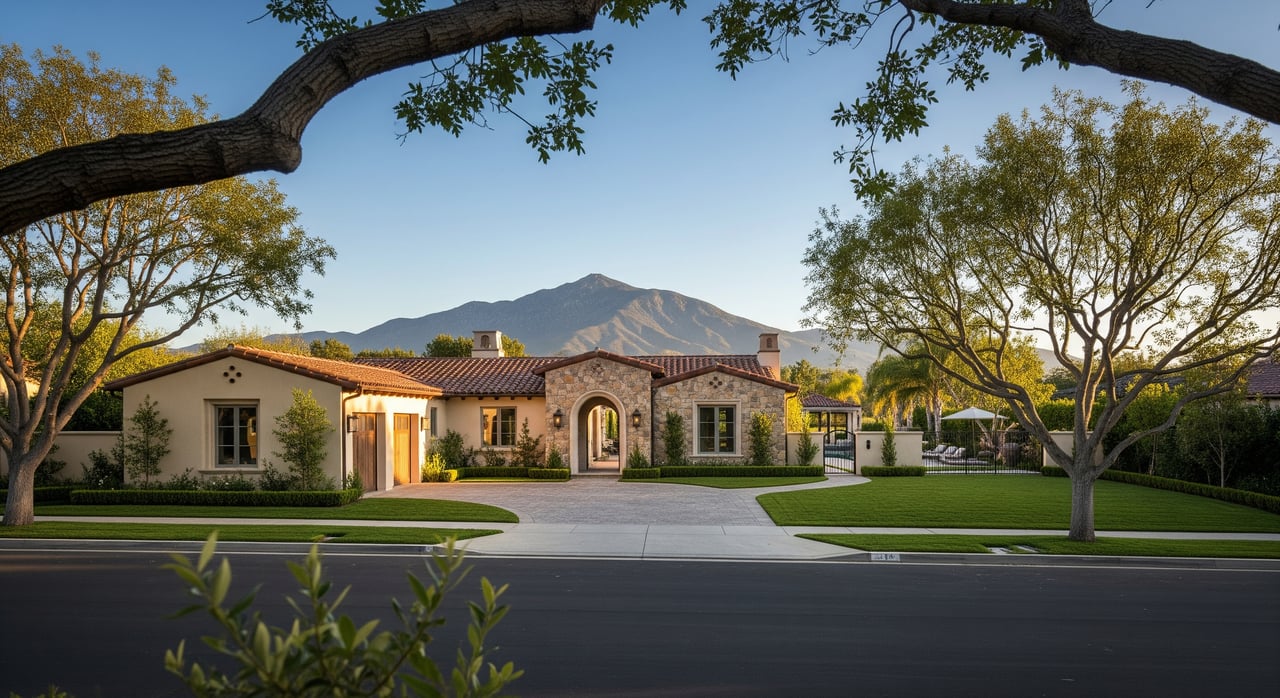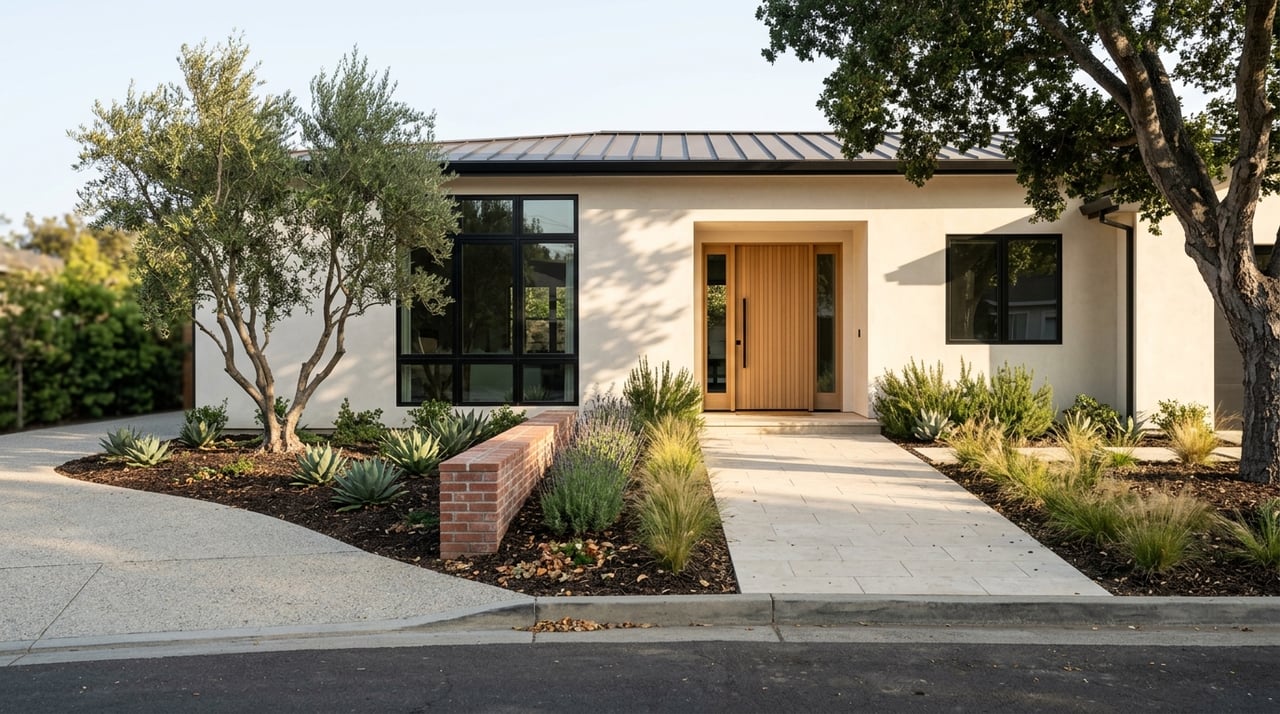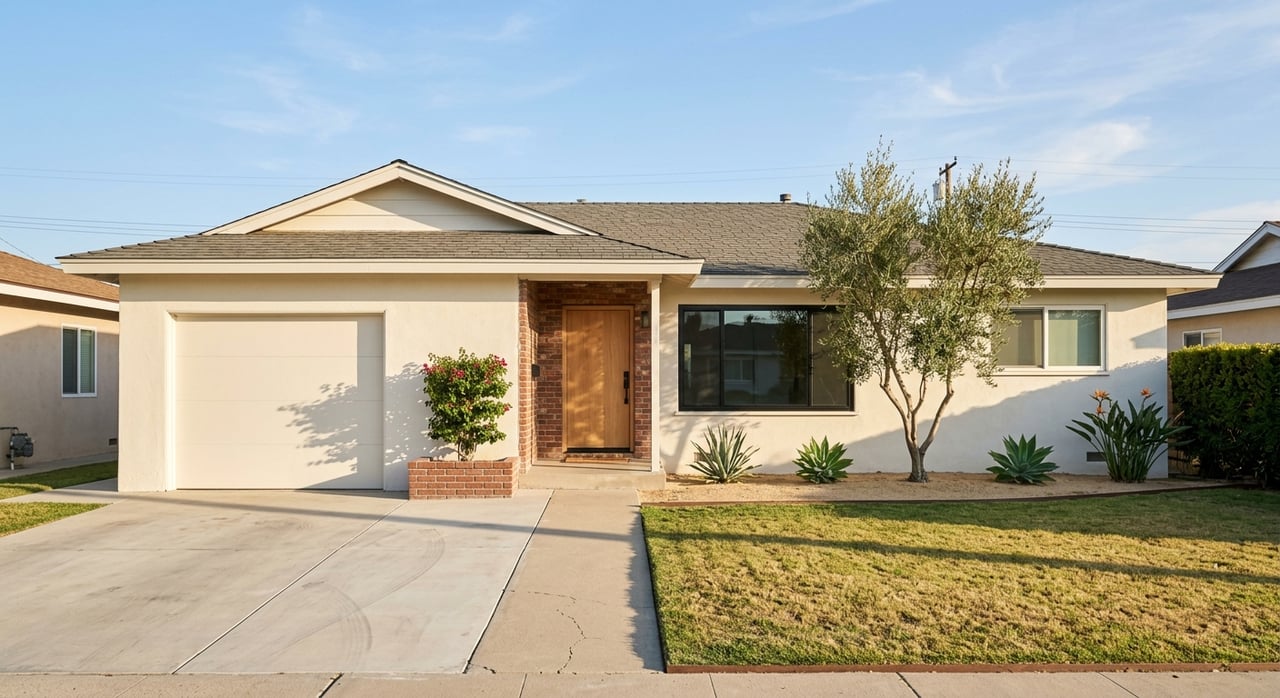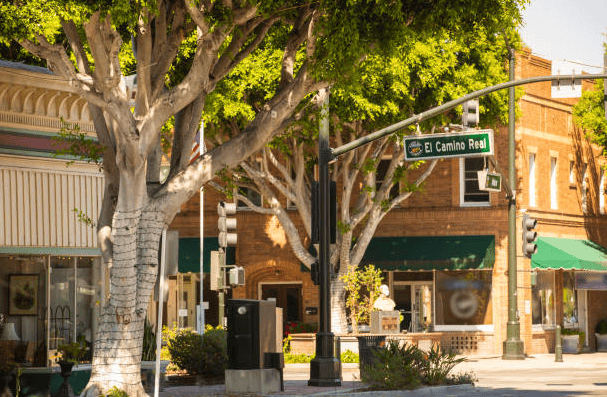
On a Wednesday evening on Santiago Boulevard, the patio at The Post fills in before the sun drops behind the water tower next door. Half-off wine bottles bring out the regulars. Somewhere under that patio's chandelier, someone is finishing a California Benny two hours past what most places call breakfast. A few doors down, Rockwell's ovens are already cooling for tomorrow's cinnamon rolls. None of this looks unusual if you live here. It should, though, because almost none of it has changed hands in decades, and that is not an accident of small-town charm. It is a direct result of a zoning fight that ended in 1967.
Villa Park has exactly one commercial district. Eleven acres, split across thirteen parcels, owned by eleven different landlords, sitting at the northeast corner of Santiago Boulevard and Wanda Road. The city itself calls it the town's sole shopping destination, and that is not marketing language. There is nowhere else in Villa Park to buy groceries, get a haircut, or grab dinner out. The businesses that operate there aren't competing with a strip mall two miles away. They're competing with nothing, which turns out to change everything about how long they stick around.
The fight that capped the corner at eleven acres
In 1965, a developer working under the name Michael's Market applied for a zoning variance to build what would become the town's only commercial center. At the time, Villa Park was zoned almost entirely low-density residential, twenty-thousand-square-foot lots, with the Villa Park Orchards Packing House and the public schools as the only exceptions. The application set off a two-year fight that split the community. Residents in the tract southeast of the proposed site pushed back hard. The dispute wasn't resolved until late 1967, when the City Council adopted a general plan that allotted a fixed, limited acreage on that one corner to commercial use, while land on the western edge of town was approved for slightly denser residential development around the same time.
That 1967 decision is the reason Villa Park never grew a second retail node the way most Orange County foothill suburbs eventually did. The commercial footprint was capped at the outset, and it has stayed capped. Every restaurant, bank, and pharmacy that has opened in Villa Park in the last sixty years has opened on the same eleven acres, because there was never a second option on the table.
Six decades, the same corner
| Year | What happened at the Town Center |
|---|---|
| 1967 | Zoning fight ends; the corner of Santiago Blvd and Wanda Rd is approved for limited commercial use |
| 1969 | The shopping center opens with a Market Basket grocery store and a Union Oil station |
| Early 1970s | Market Basket fails after a resident boycott and is replaced by Ralph's |
| 1972 | The town's 1904 community hall is torn down; a combined city hall and library building rises in the Town Center |
| 1978 | First Class Pizza opens its first location |
| 1987 | Marty Colleary opens Rockwell's Cafe and Bakery |
| 1993 | DeAngelo's Char Burger closes after 25 years; Colleary partners with a neighbor to open Blyleven's Dugout Diner |
| 2004 | The Centennial Rotary Clock is installed, funded by donors whose names are engraved at its base |
| Today | The Post operates under the Rockwell's name; Ralph's still anchors the same lot it took over roughly fifty years ago |
Look at that list again. A grocery store that failed in the early 1970s was replaced by the same Ralph's that is still ringing up groceries today. A pizza shop that opened in 1978 has been serving the same corner for nearly fifty years. The corner doesn't turn over. It accumulates.
Why eleven landlords produce restaurants that don't leave
Here is the part that surprises people who assume a small commercial footprint means fewer choices and more churn. The opposite has happened. Because the city controls zoning for the Town Center but has no authority over how each of the thirteen parcels is leased or operated, residents have had almost no say in who moves in when a storefront turns over. Many didn't want another bank, and got one anyway. Many didn't want a Dunkin Donuts, and it came anyway. The city can decide that a parcel stays commercial. It cannot decide what goes inside it.
That arrangement sounds like it should produce a revolving door of interchangeable tenants, the kind of turnover you see in any strip center where the landlord just needs someone paying rent. Instead, the businesses that have lasted are the ones that treated the corner as a destination rather than a location, because there was no cheaper storefront across town to fall back on if it didn't work. When you only get one shot at the one commercial block in the city, you build something people come back for on purpose.
The diner with a Hall of Famer's name on the lease
The clearest version of that story involves a ballplayer. Marty Colleary opened Rockwell's Cafe and Bakery in 1987, and that bakery is still filling the corner with cinnamon rolls today. Six years after opening it, when DeAngelo's Char Burger closed its doors after a 25-year run, Colleary didn't wait for an outside chain to take the space. He partnered with Bert Blyleven, a Villa Park resident and a Major League Baseball Hall of Fame pitcher, to open Blyleven's Dugout Diner in the storefront DeAngelo's left behind. Neither man was scouting a demographic. Blyleven put his name on a lease in the one commercial block his own city had to offer.
Rockwell's is still baking, and the restaurant that now shares its name and its corner, The Post, runs a patio built around the actual Villa Park Water Tower, with seating lit by a chandelier hung beneath it. Wednesdays still mean half-off wine bottles. Locals still point to the California Benny and the cinnamon roll as the reasons to come back. Live music still fills the patio most nights. Whatever storefronts have opened and closed on that block since 1987, the Rockwell's name never left it.
The same corner runs the whole calendar too
It isn't only groceries and dinner that concentrate onto those eleven acres. City Hall sits there. The library sits there. The town's civic calendar also reaches beyond the Town Center:
- A spring shred and e-waste day in the City Hall parking lot each April
- The Villa Park 5K and Health and Wellness Fair, held each May at the Community Services Foundation grounds
- The July 4th Parade, Family Picnic, Block Party, and Concert, held this year at Cerro Villa Middle School as part of the city's celebration of the nation's 250th anniversary
- A Halloween event each fall with carnival games, a costume contest, trick-or-treating, and local vendor booths
- The Dry Land Boat Parade each December, an asphalt harbor tour of more than fifty decorated floats with neighborhood watch parties along the route
- The Santa Tour by Fire Engine, a tradition that the Villa Park Community Services Foundation notes goes back decades, with Santa and City Council members riding an OCFA engine through the city's streets
- A Marine Thanksgiving host-family program each fall
Almost every one of these is organized by the same Foundation and the same City Hall that sit inside the same eleven acres as Ralph's and The Post. The corner isn't just where you run errands; it anchors much of the town's civic life, even when events take place elsewhere.
What that means on an ordinary Wednesday in August
Right now, in the stretch between the 5K trophies handed out in May and the Halloween vendors setting up their booths in the fall, an average Wednesday on Santiago Boulevard runs the same rhythm this corner has run since Colleary first opened Rockwell's in 1987. Half-off wine at The Post. The water tower lit above a full patio. The Centennial Clock, engraved with the names of the neighbors who paid for it, still keeping time near a City Hall that will host the shred day again next April and the Santa Tour again in December. Nothing about that evening looks remarkable if you already live here. It's remarkable precisely because it hasn't changed, on a corner that was never given room to.
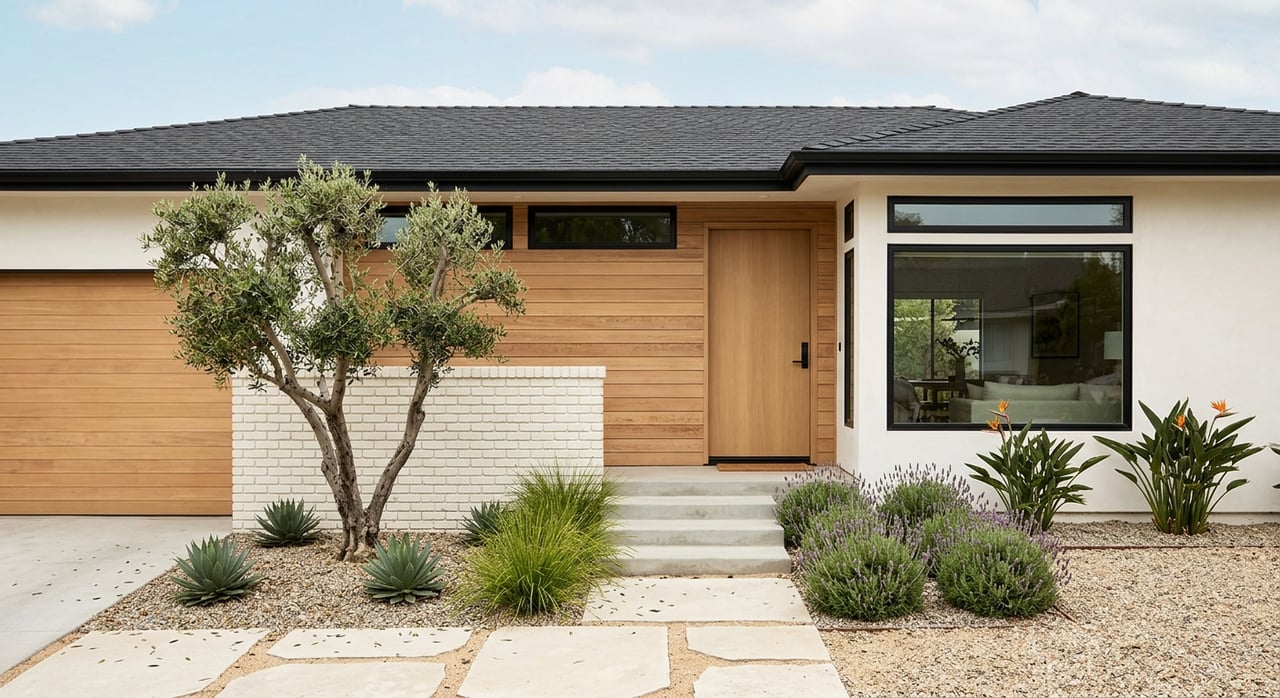
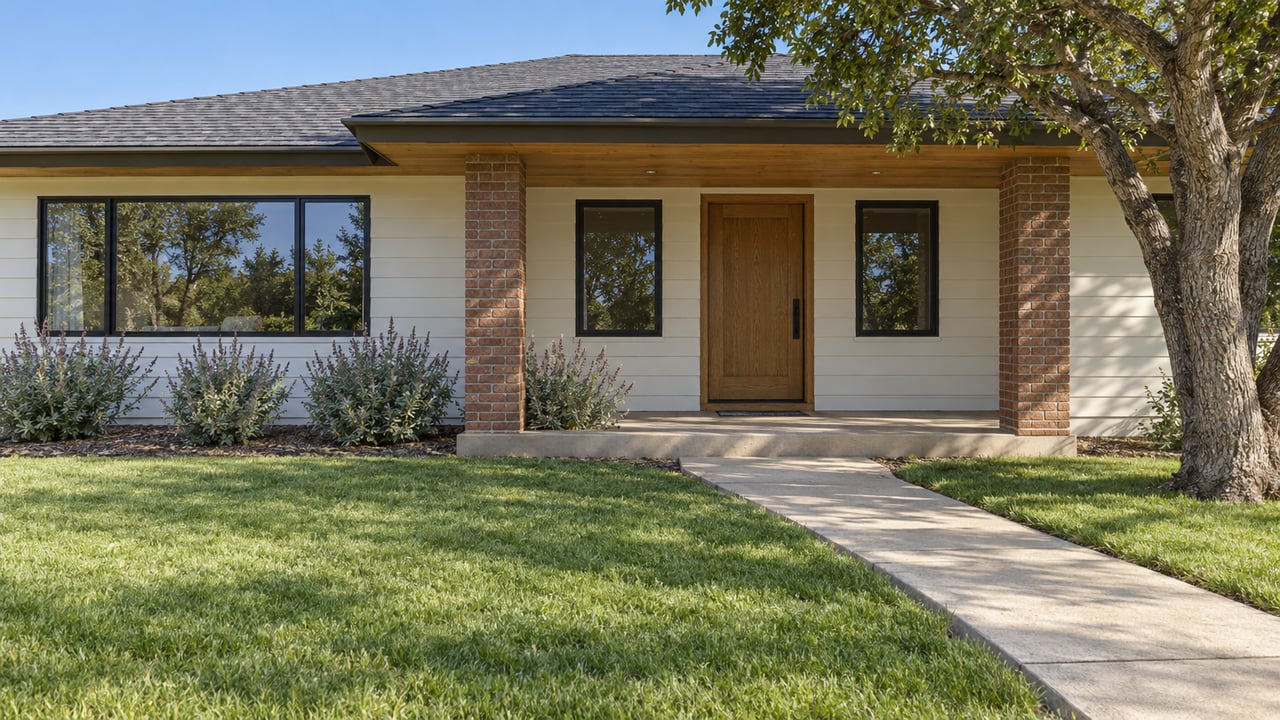
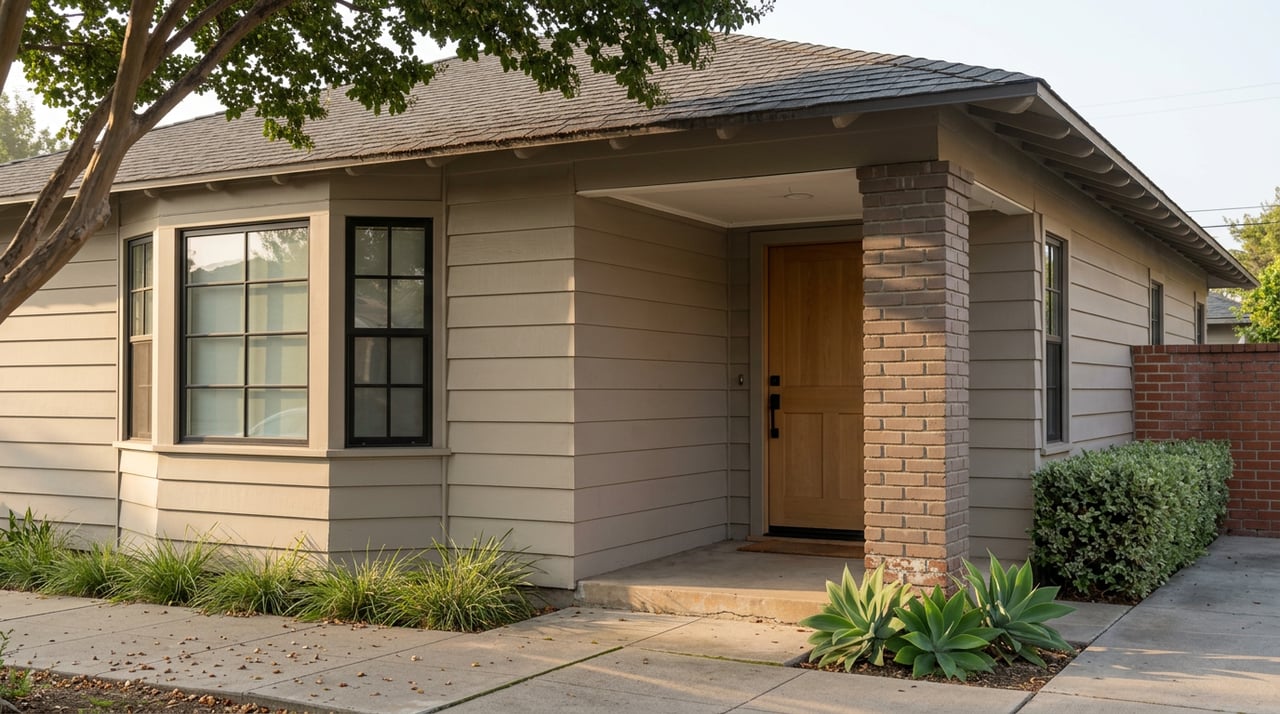
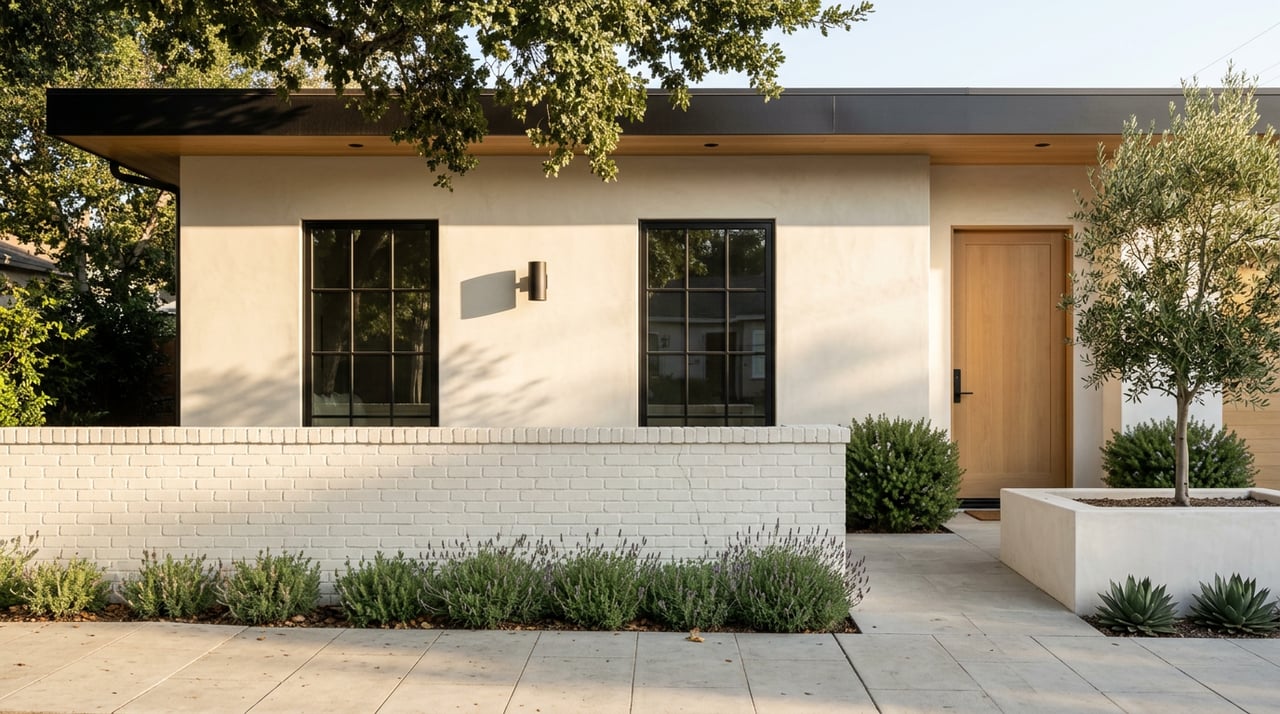
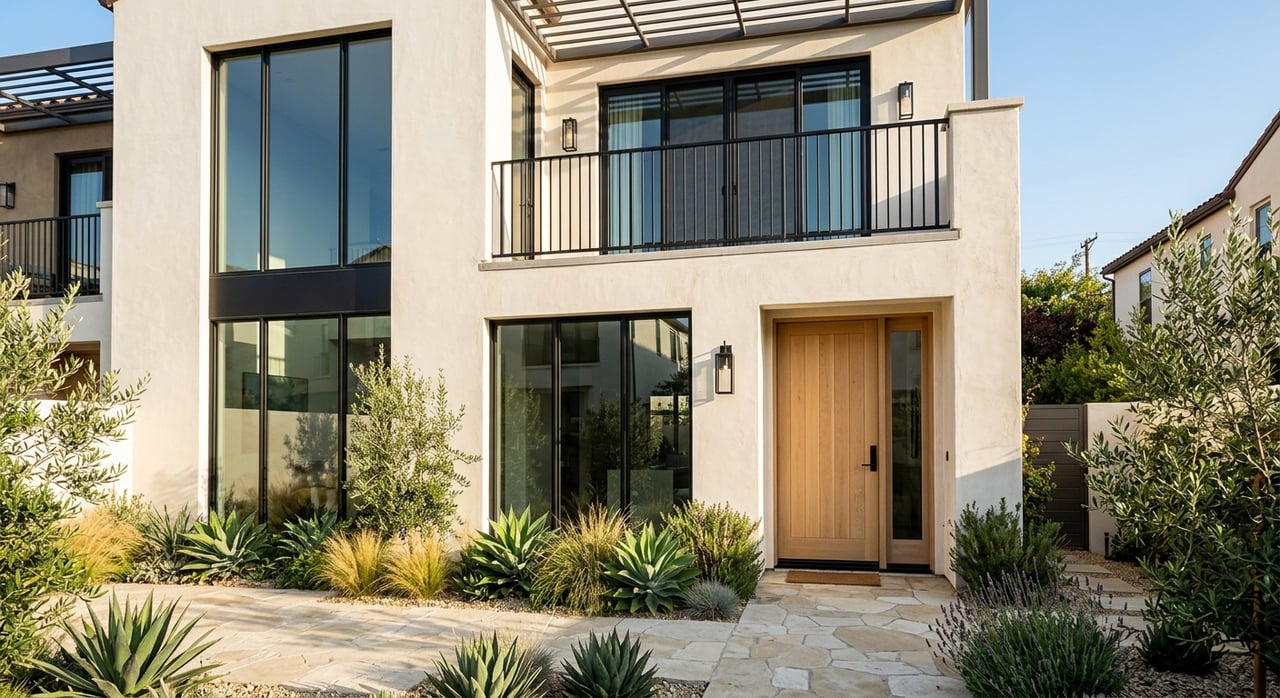
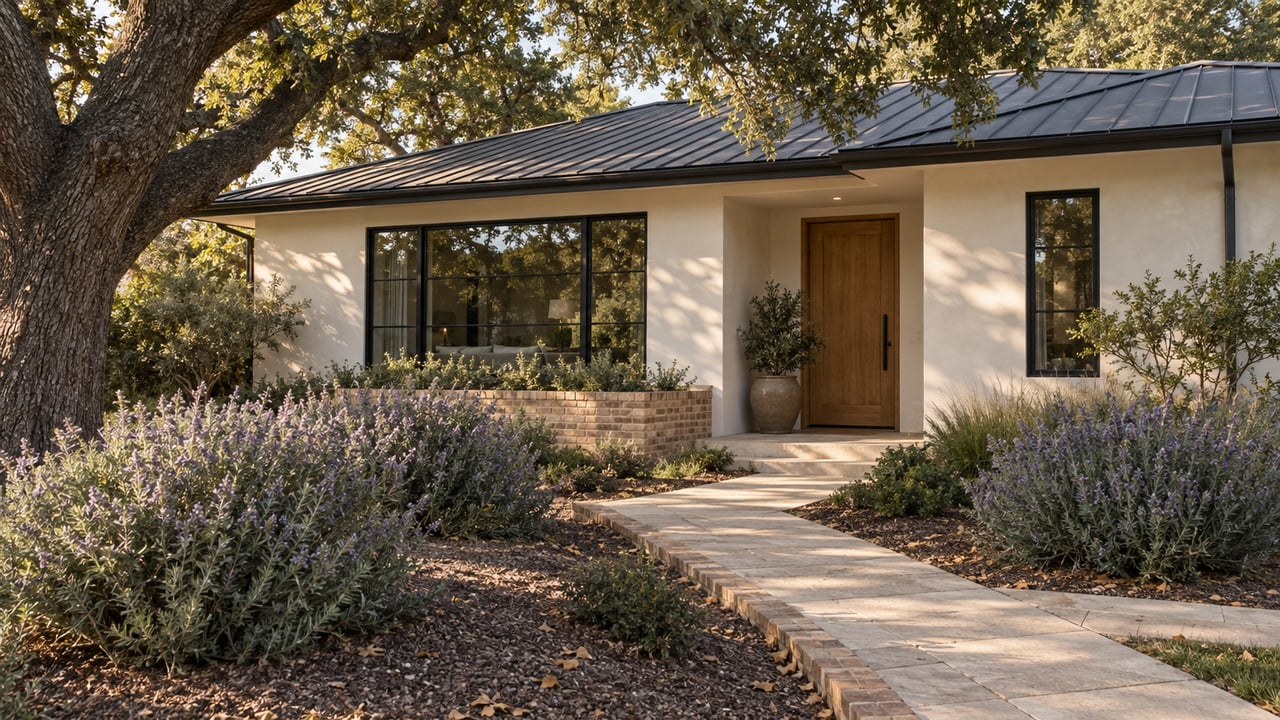
Living somewhere this concentrated has an upside most people don't think about until they're comparing it to a neighborhood built the other way, with three competing shopping centers and a restaurant scene that turns over every eighteen months. Villa Park's version of continuity is built into the ground itself. If you're curious what that same permanence looks like in the housing stock around that one corner, and what design choices tend to hold their value the way Rockwell's has, Real Estate by Cindi keeps close track of both.
This article is general information, not legal, tax or financial advice. Consult a qualified professional about your situation.