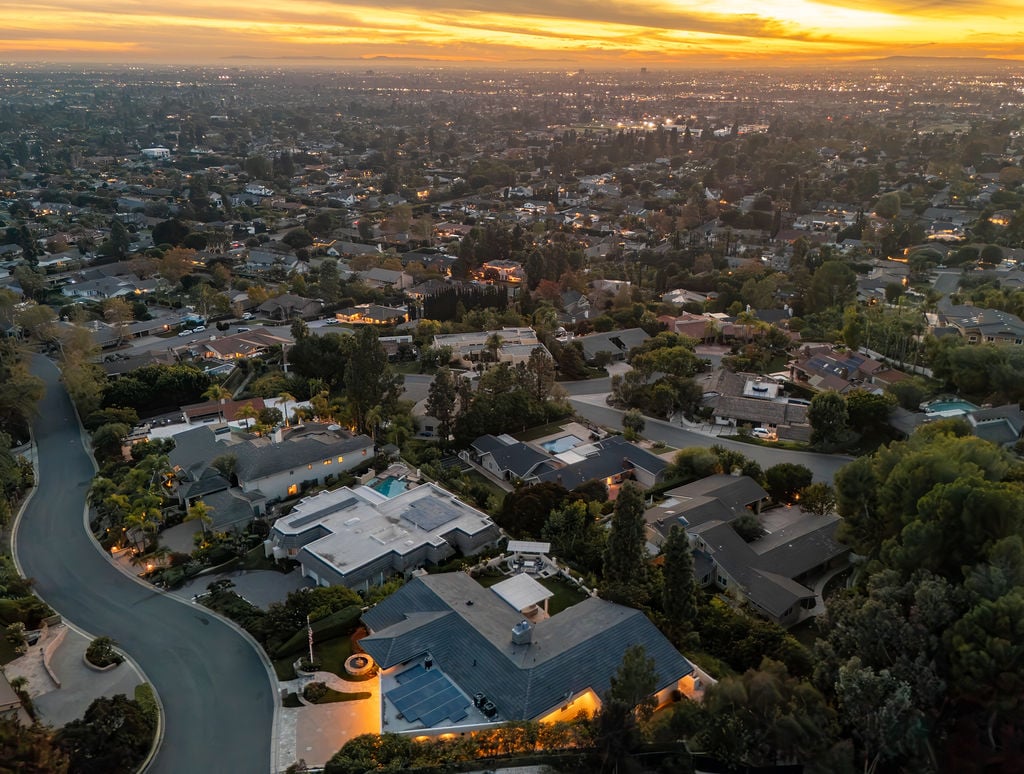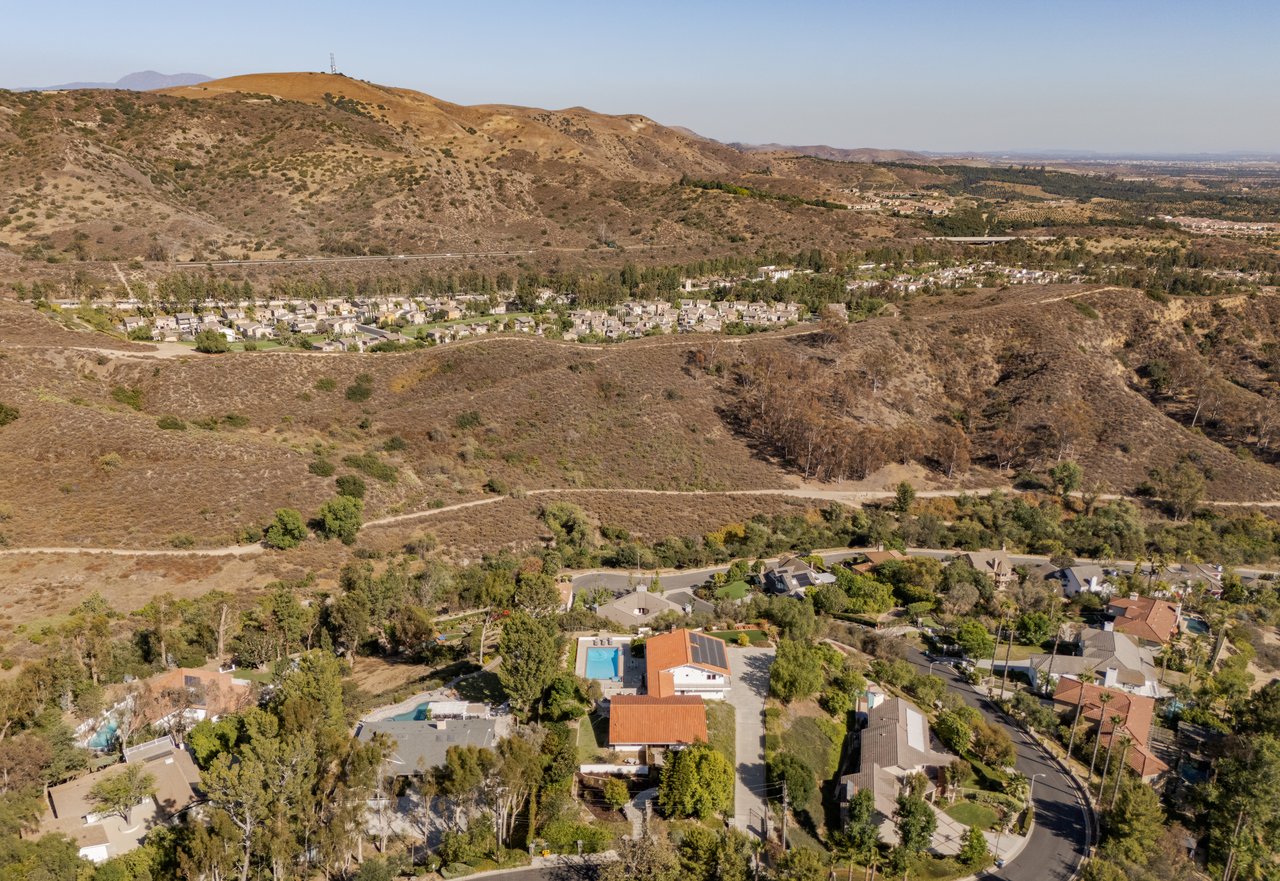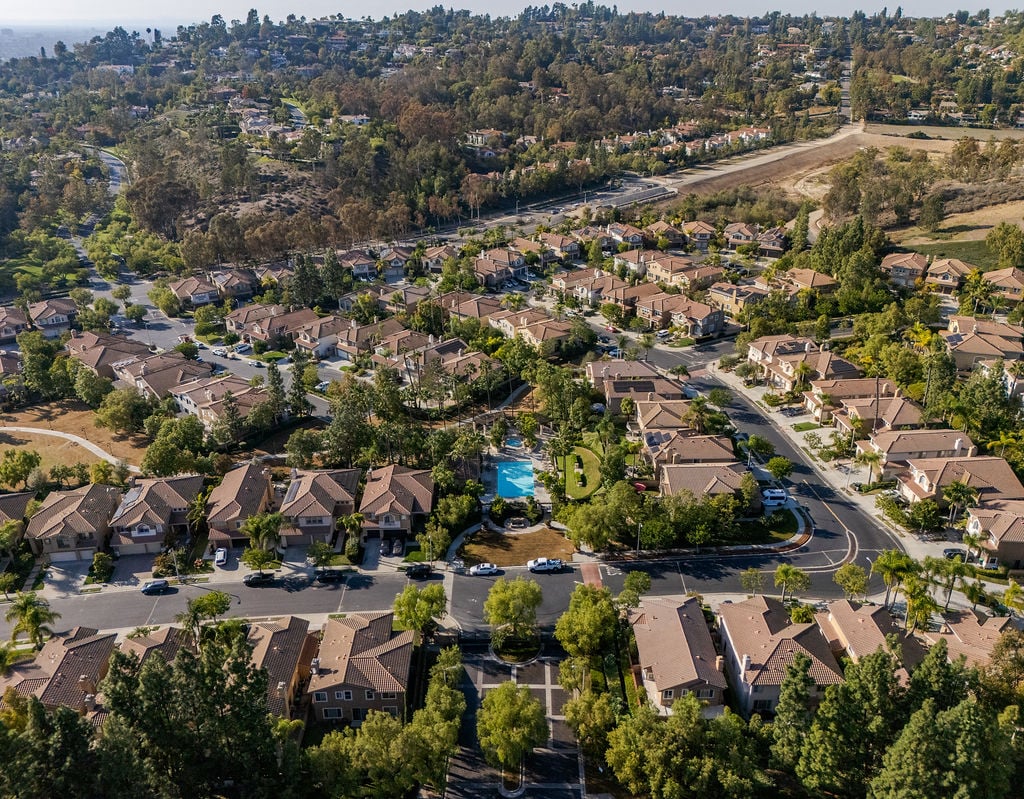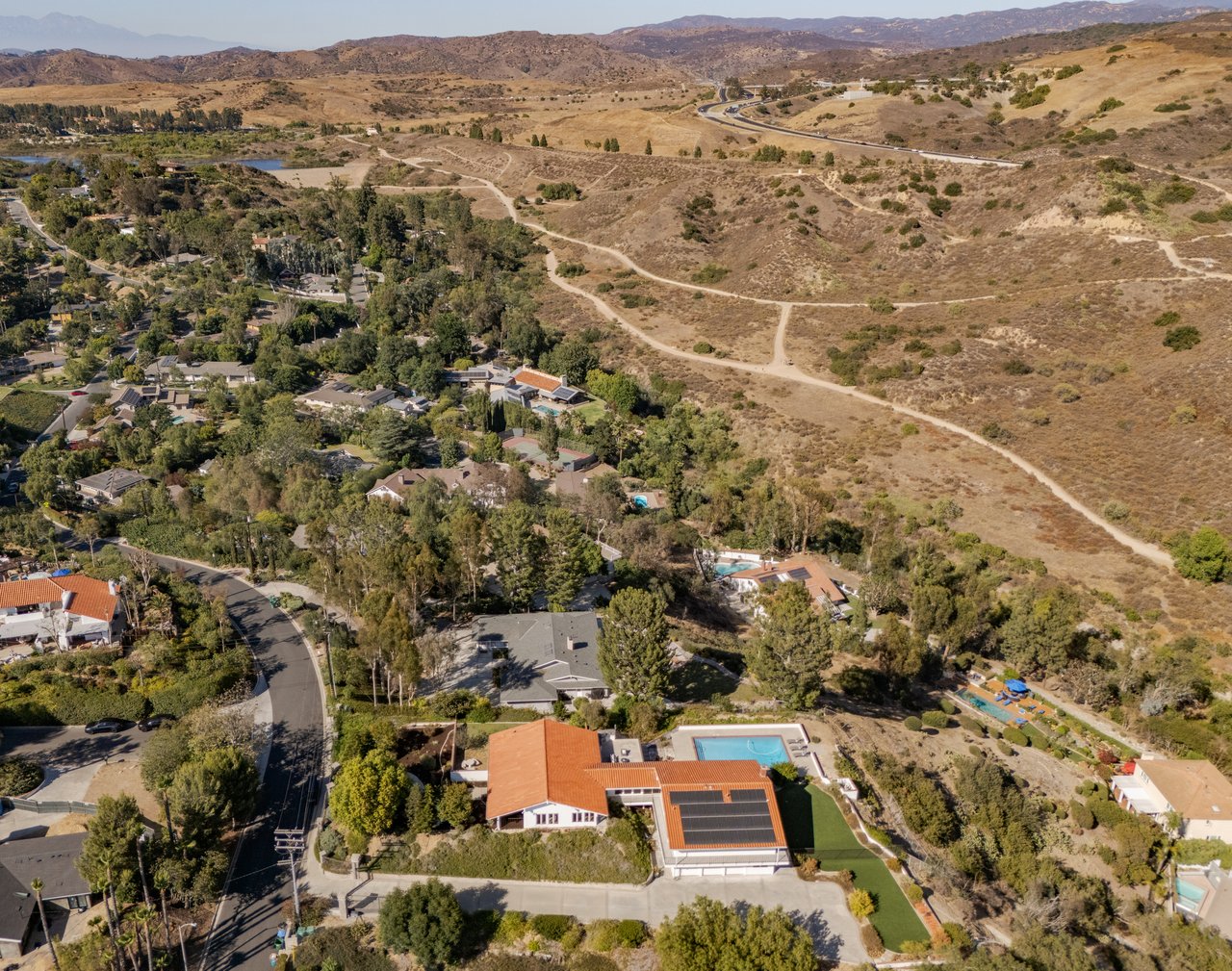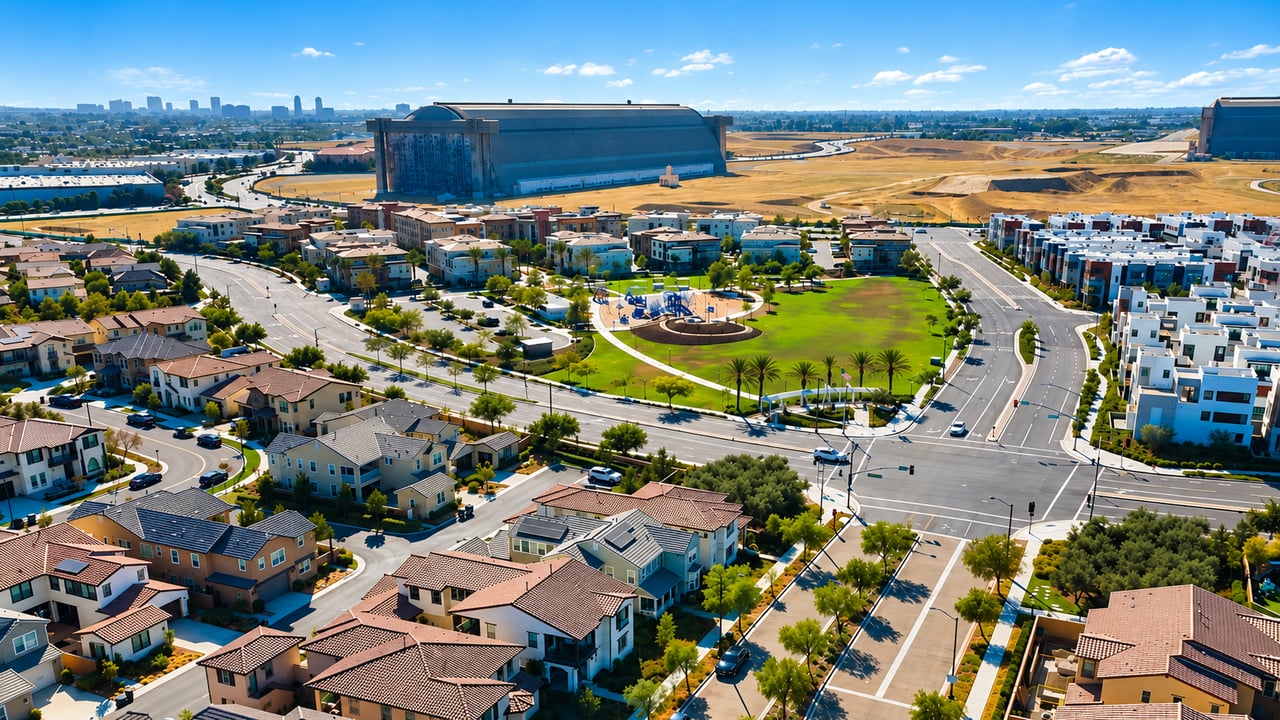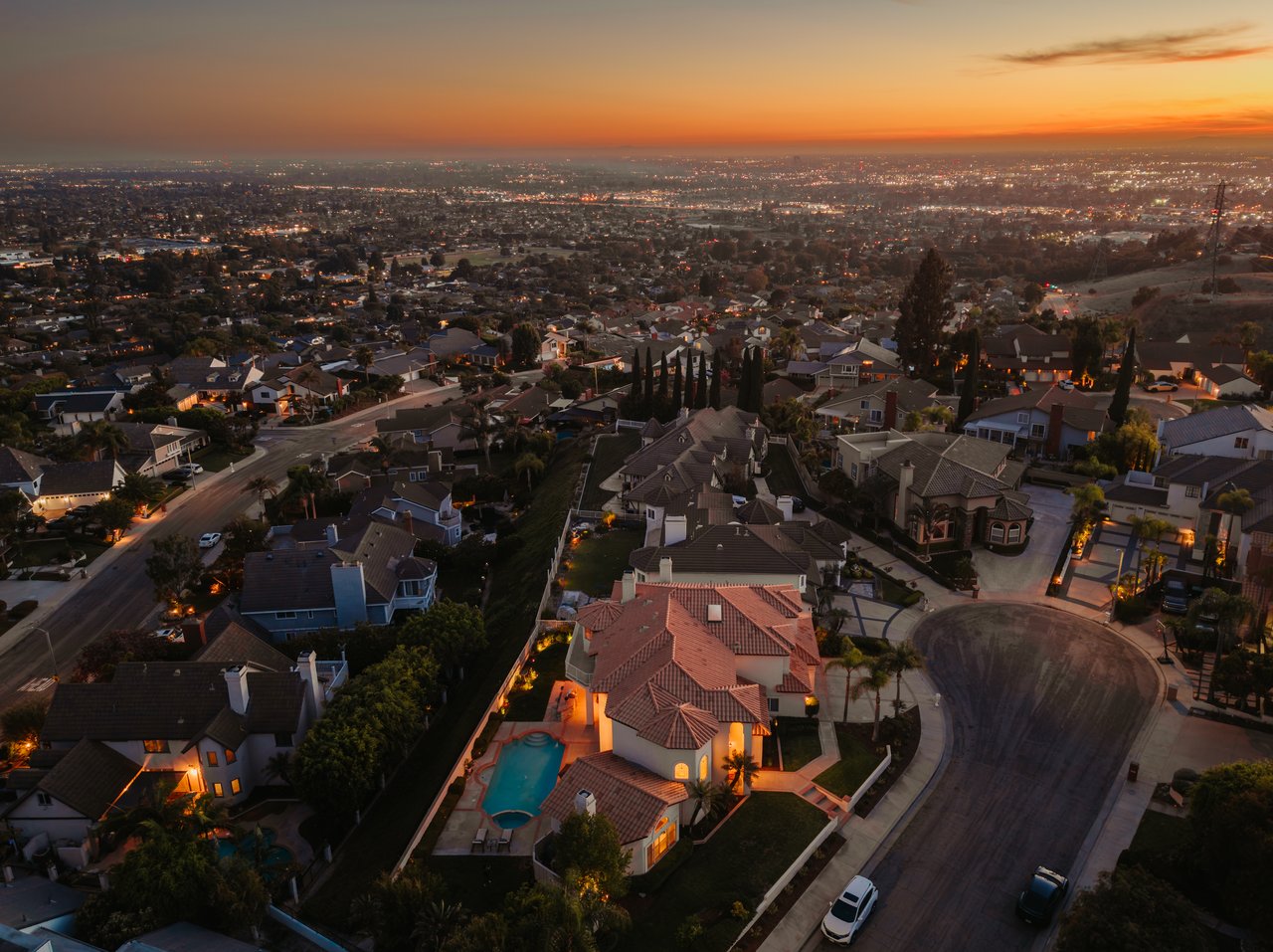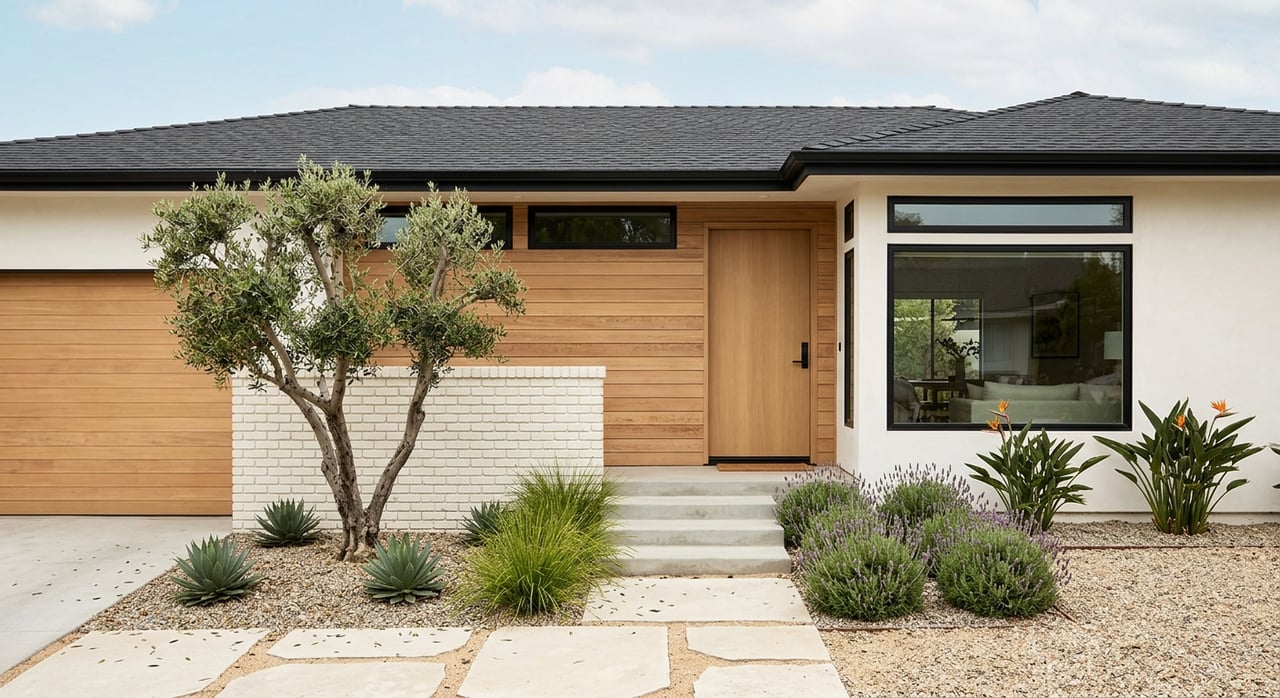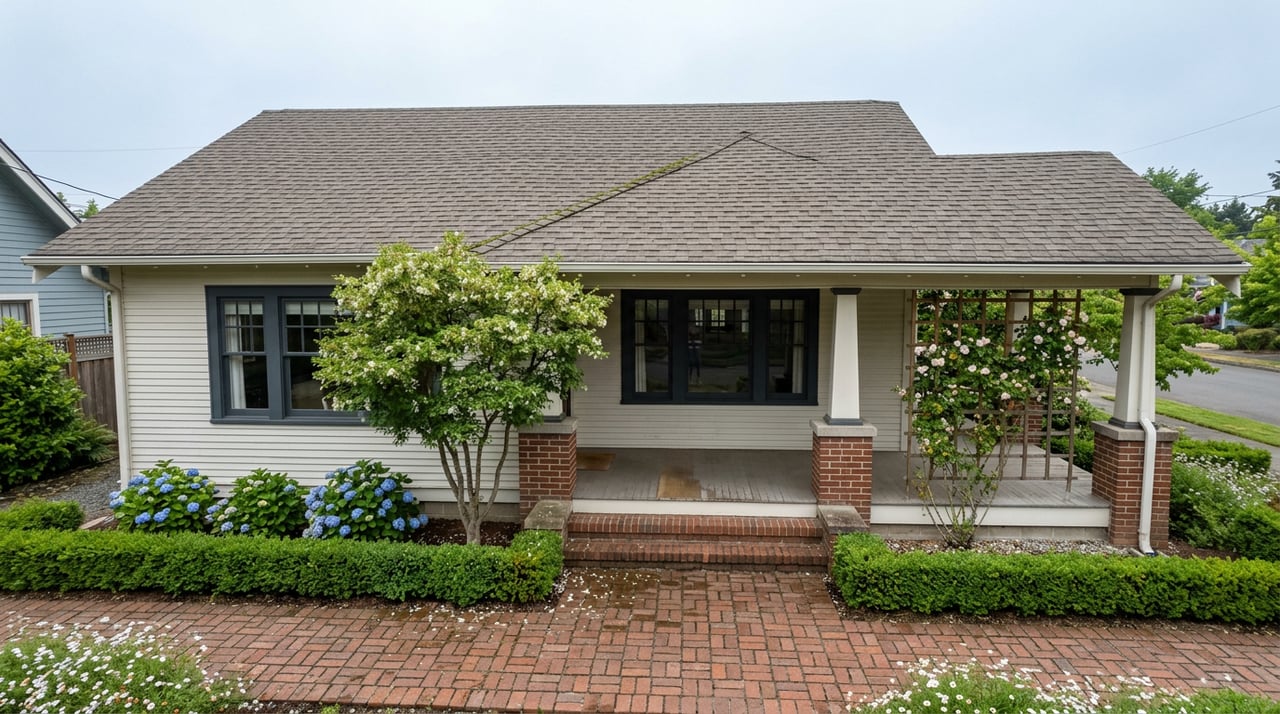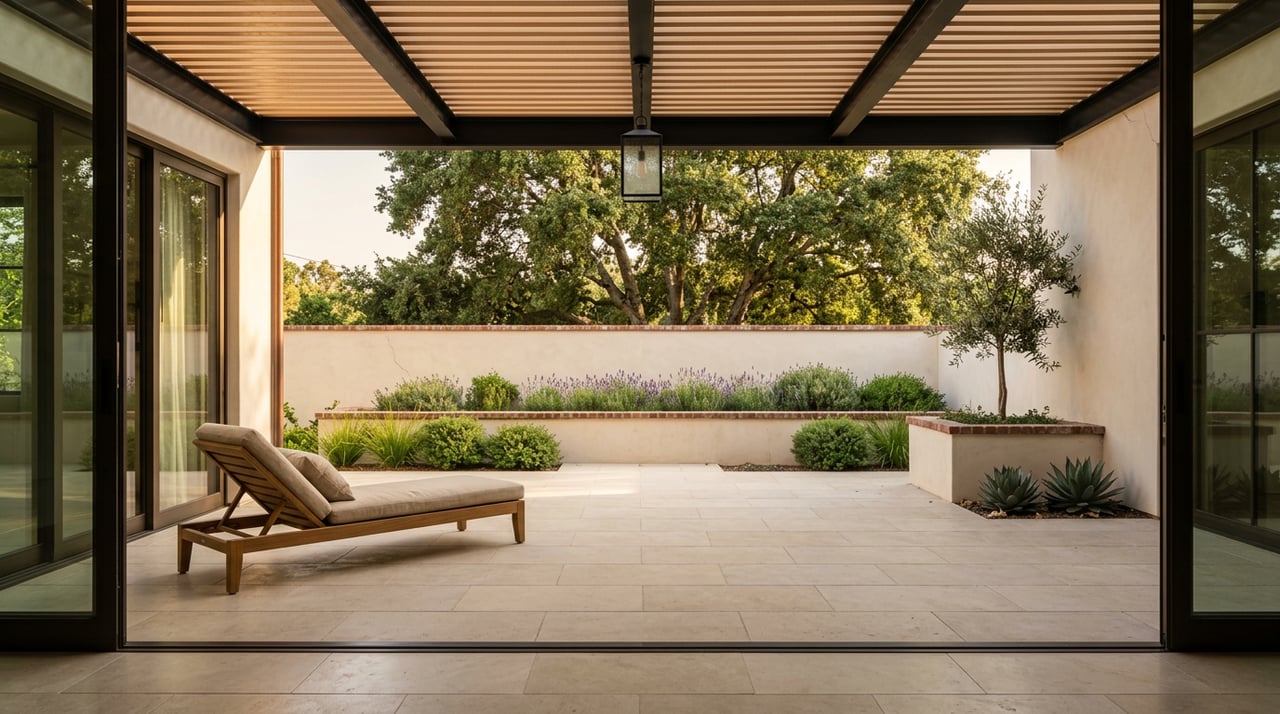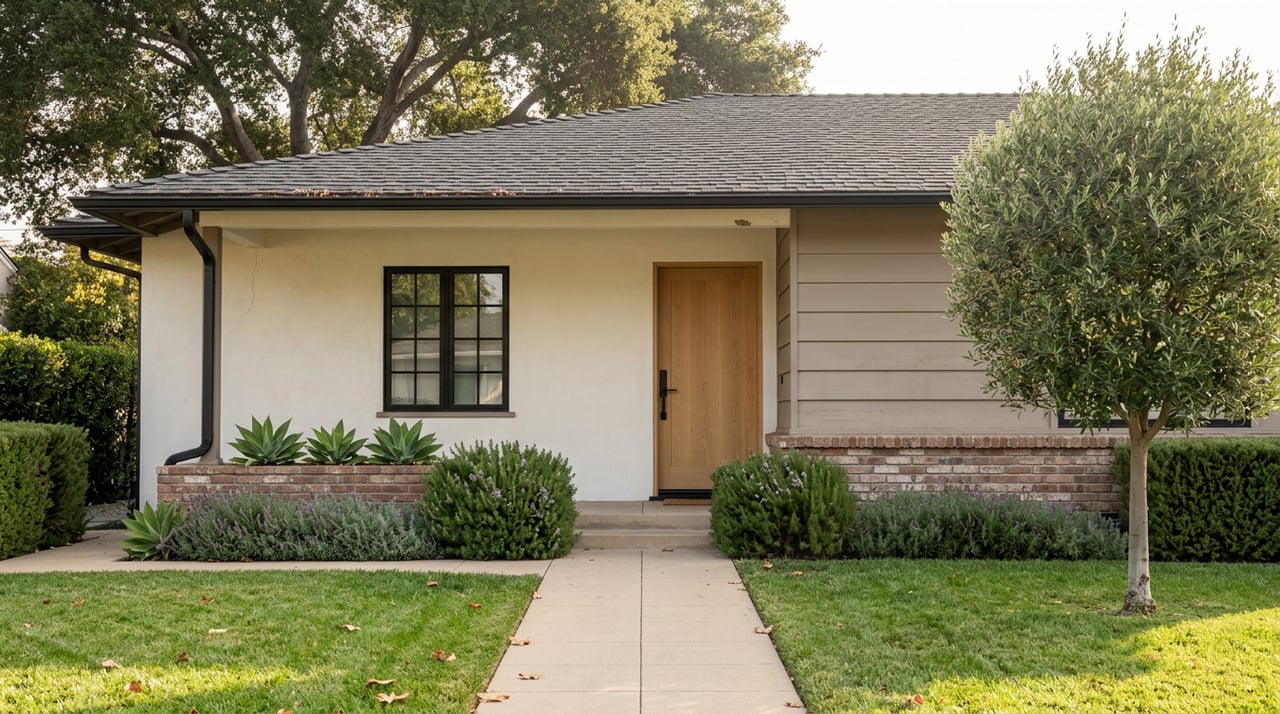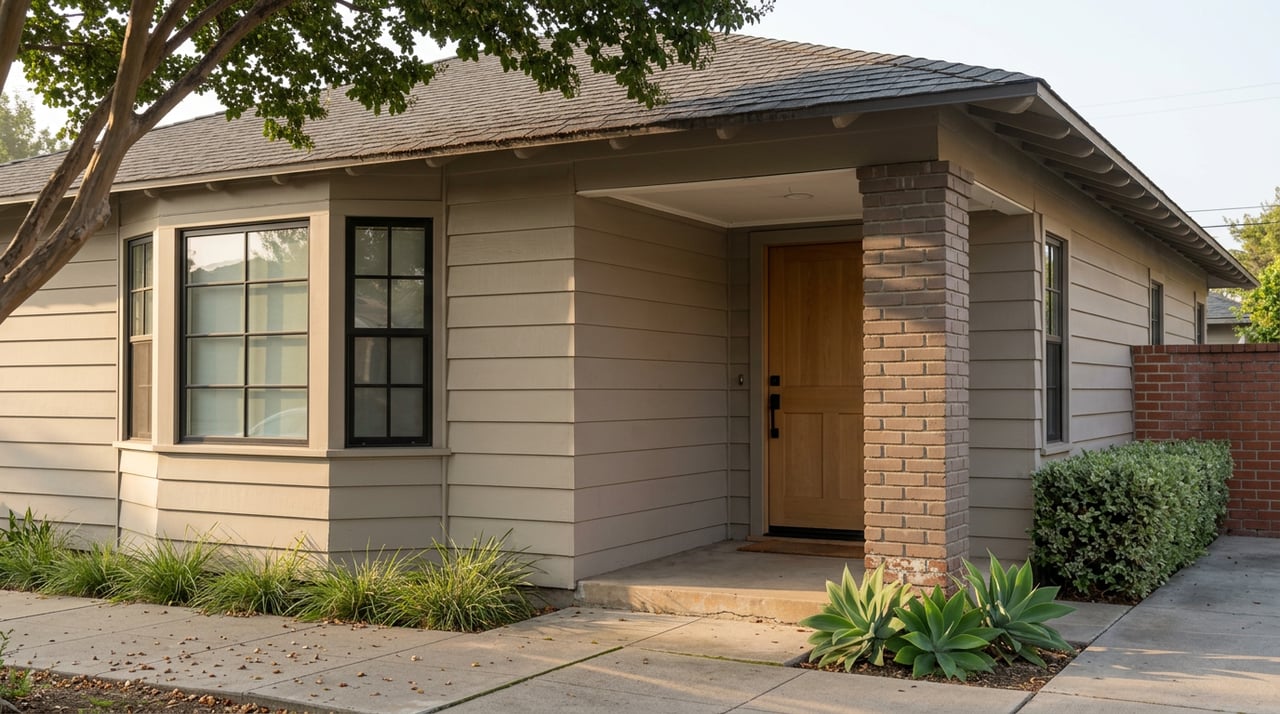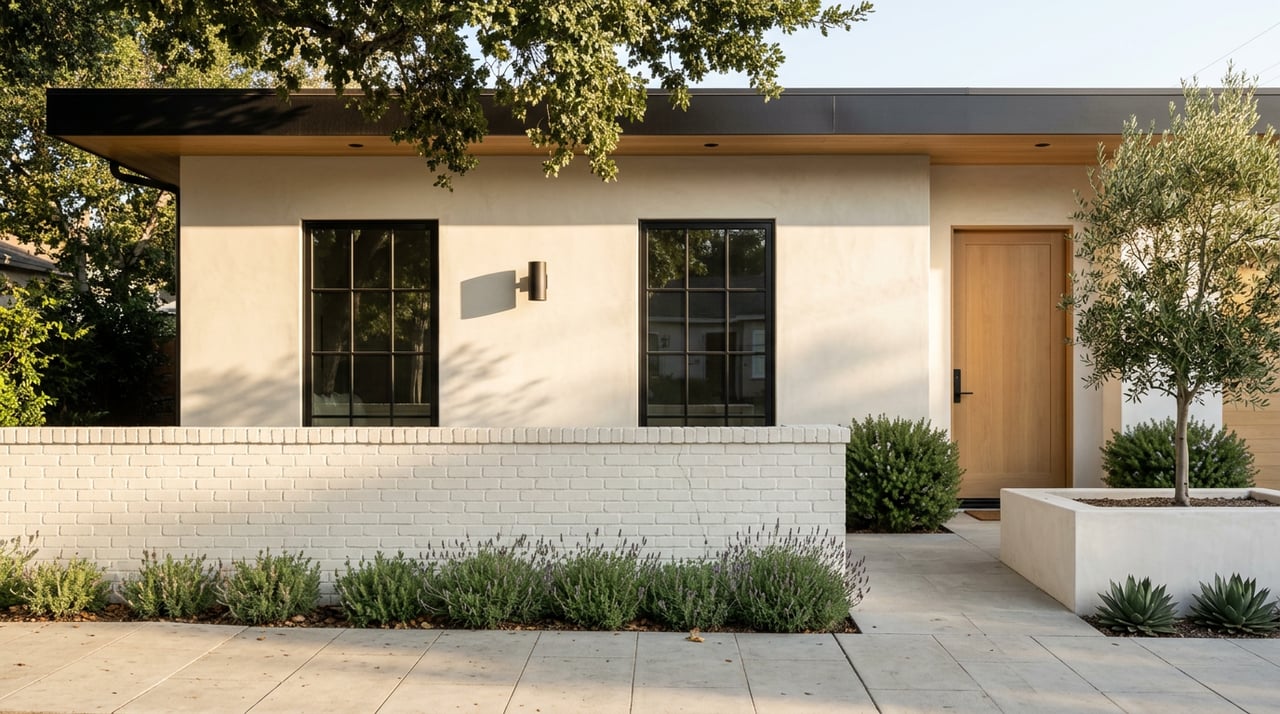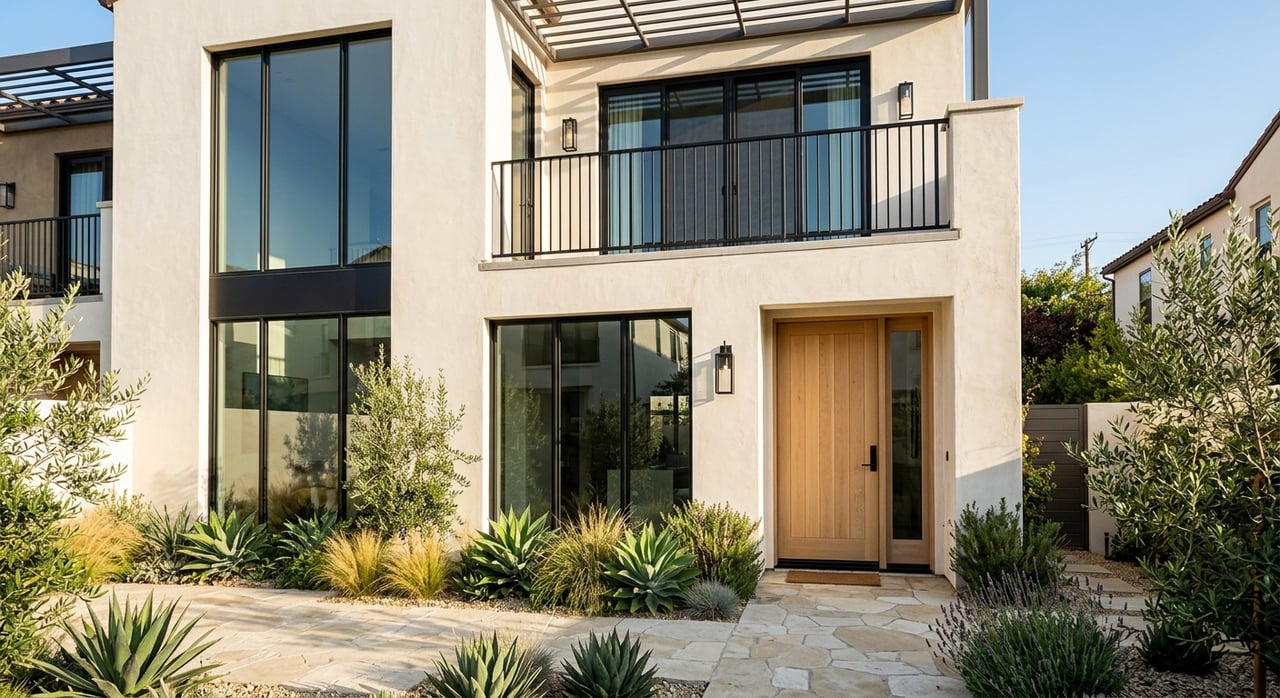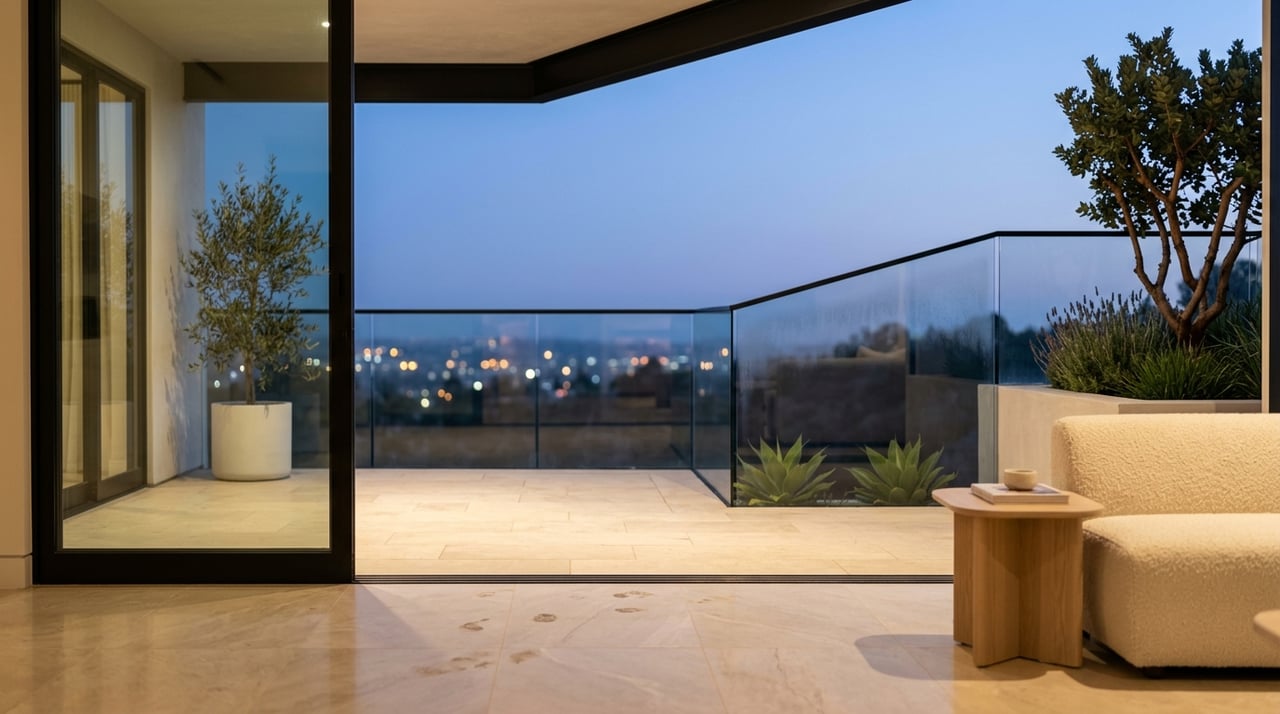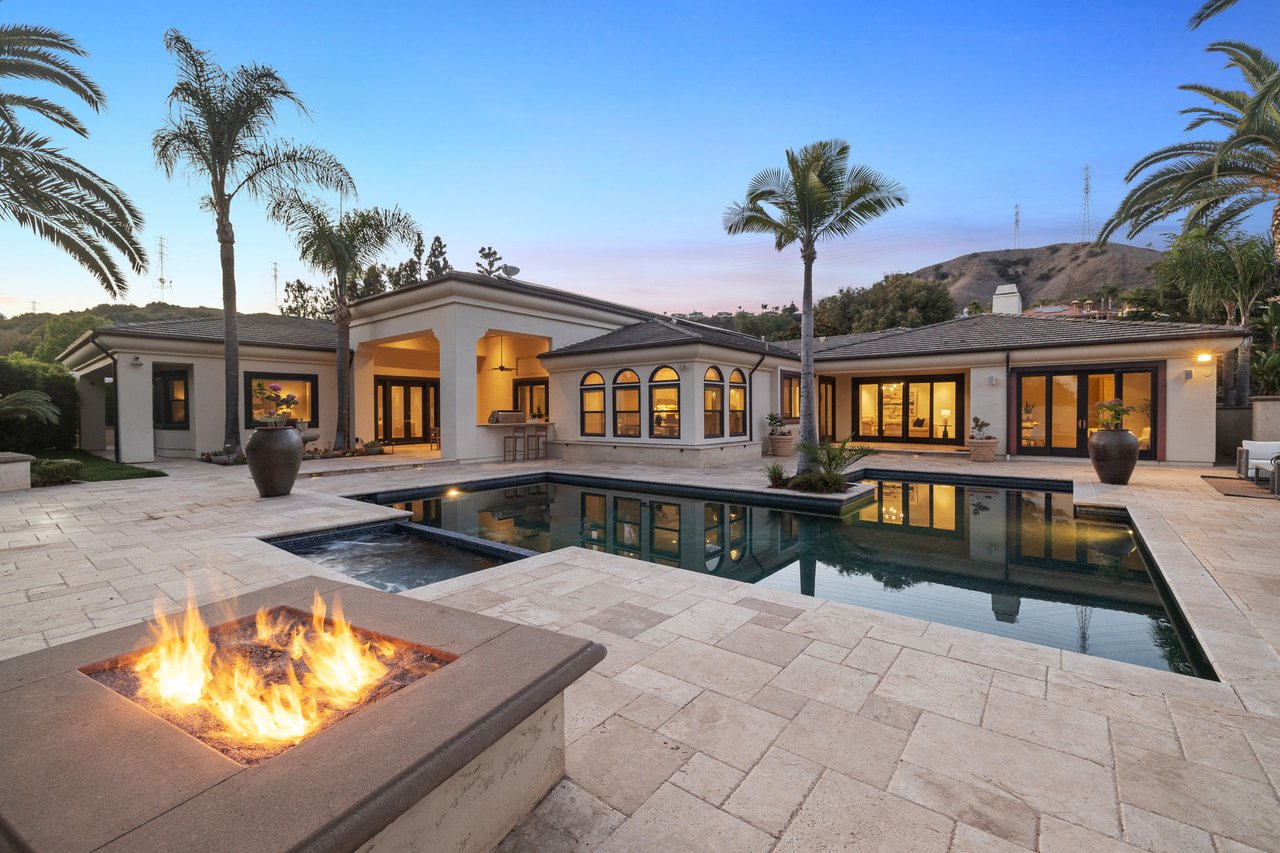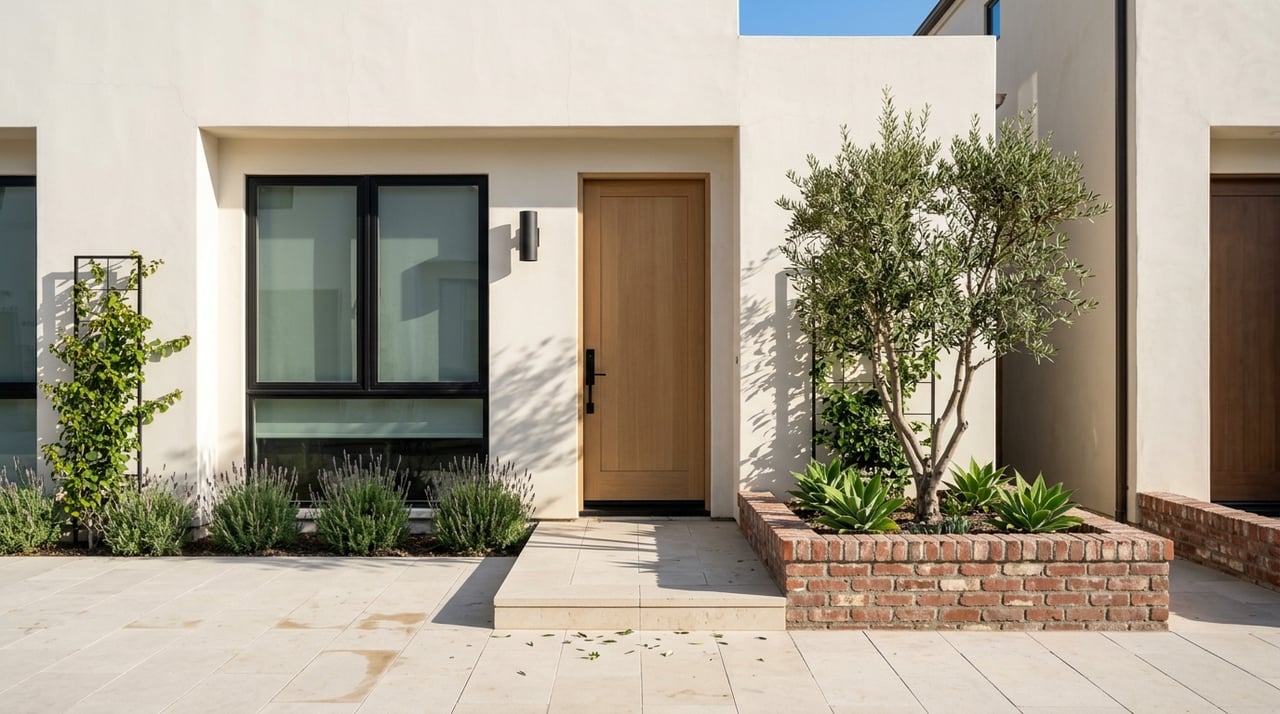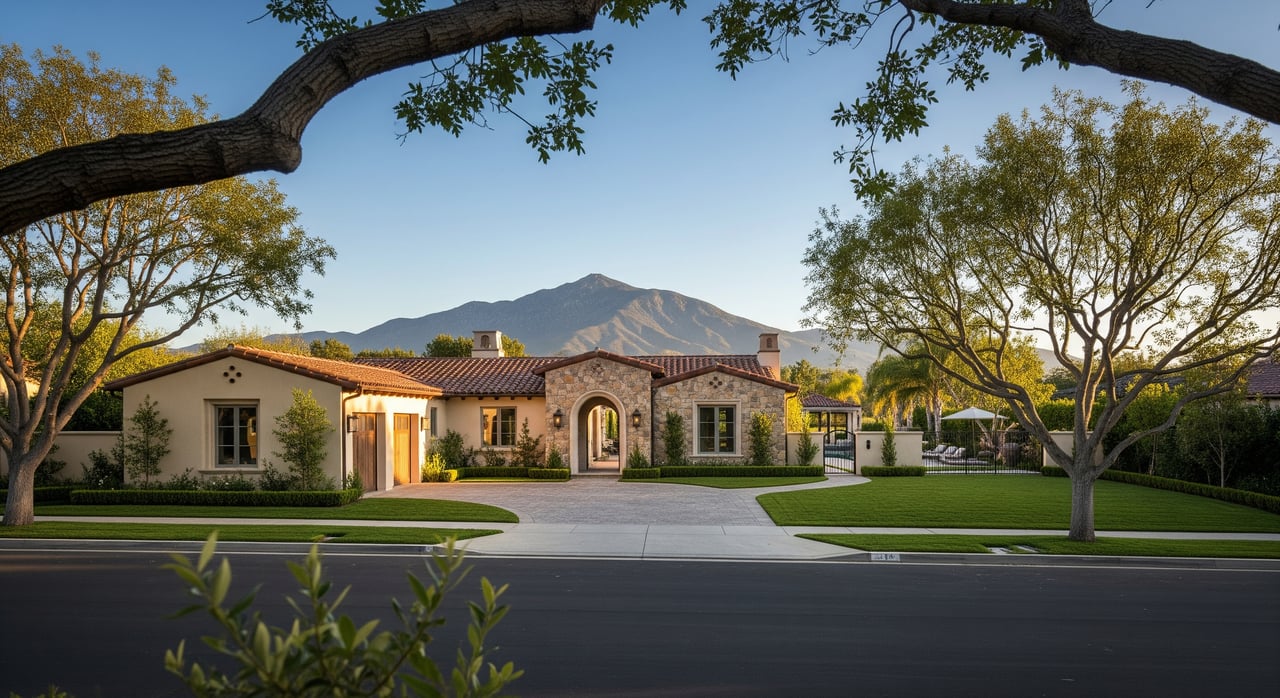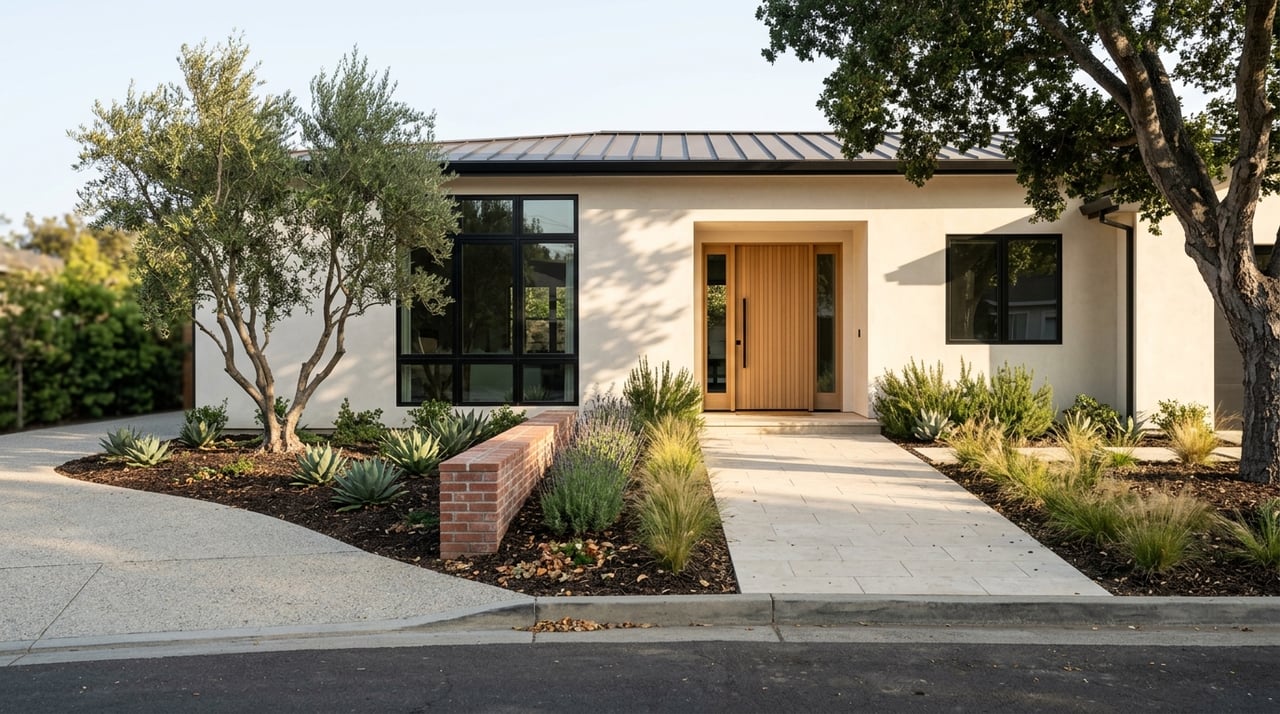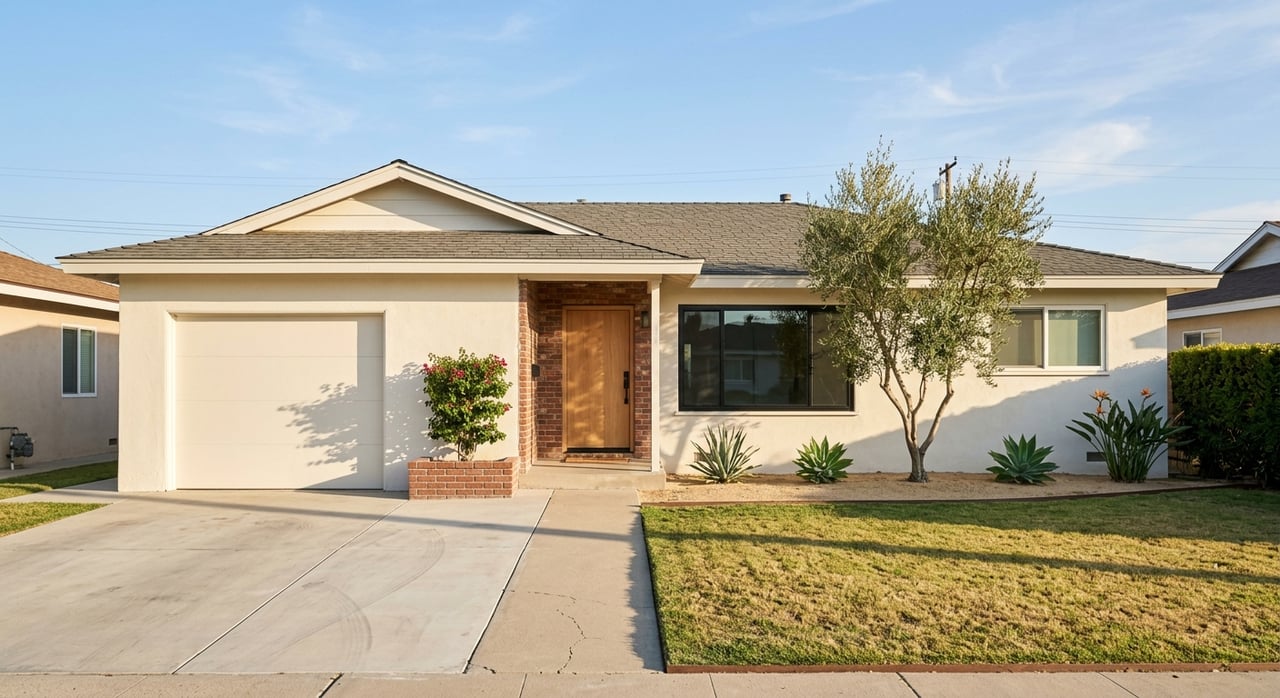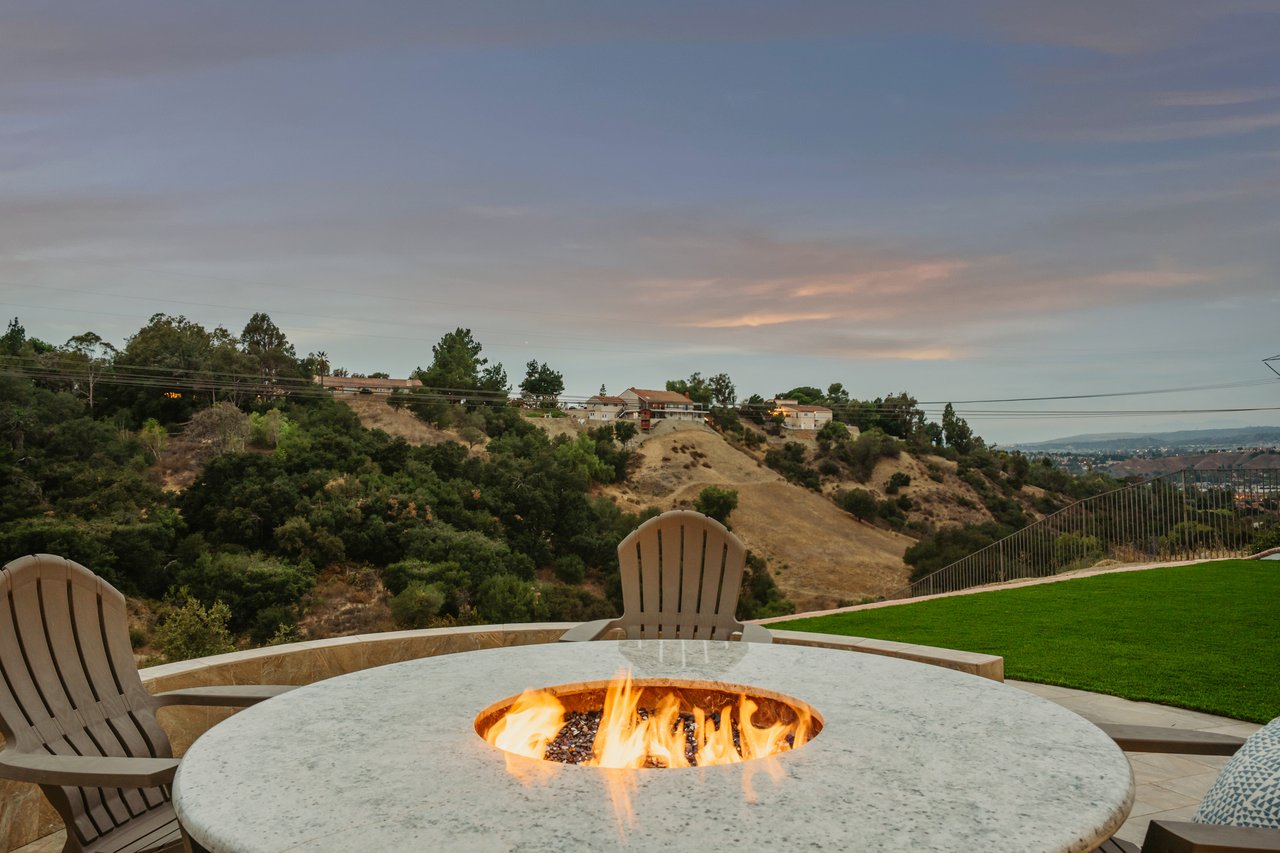
A buyer who falls for a canyon-view estate in Belsomet or Hidden Canyon is about to discover something the listing photos never mention: the Office of the State Fire Marshal says the seller has to produce a compliant Defensible Space Inspection before that sale can close. California has required this document on every residential sale inside a high or very high fire hazard severity zone since July 1, 2021, and it exists precisely because the same slope that makes the view worth paying for is the slope an insurer worries about. A buyer touring a similar home three streets over, on a flat interior lot with no canyon frontage, will never see that requirement at all. Same city, same school district, sometimes the same builder and the same year of construction. Different rulebook.
That split is the part the median price can't show you, and it's worth understanding before you fall for a view.
The number that hides a second market
Spring 2026 reporting put single-family home prices across Anaheim Hills in the $1.03 million to $1.15 million range, with the most expensive pockets running far above that: Hidden Canyon in the $3 million to $6 million-plus tier, Peralta Hills and Copa De Oro from $2.5 million to $5 million-plus, Summit Pointe between $2.15 million and $2.9 million, and Belsomet from $2 million to $3.5 million. Every one of those premium communities sells on the same feature: elevation, privacy, and a canyon or ridgeline view that a tract home in the flats simply does not have.
Here's the part that doesn't show up in the marketing copy. Elevation and canyon proximity are also the exact criteria California's fire agency uses to draw its Very High Fire Hazard Severity Zone maps, and Anaheim Hills zip code 92808 has shown up on lists of Orange County zip codes with elevated insurance non-renewal activity in 2026, alongside Laguna Beach hillsides, Yorba Linda's canyon areas, brush-adjacent tracts in Mission Viejo, canyon edges in Lake Forest, and parts of San Clemente. The buyers paying the most for a view in Anaheim Hills are, structurally, the buyers most likely to run into an insurer who won't write the policy.
Why hillside coverage can be harder to find
Between 2023 and 2025, several major carriers, including State Farm, Allstate, Farmers, and a reduced-appetite USAA, paused new business or non-renewed existing policies across California's higher-risk zip codes, filing formal market exits with the state Department of Insurance rather than treating it as a temporary pullback. Chubb and AIG have restricted their hillside writing as well.
When a standard carrier declines or non-renews a policy, the property falls back on the California FAIR Plan, the state's insurer of last resort, or a private surplus-lines policy. Neither is cheap, and neither behaves like the HO-3 policy most Anaheim Hills buyers grew up assuming came with the house.
Coverage tier | Typical annual premium |
|---|---|
Standard admitted HO-3 policy, statewide average | About $1,480 |
FAIR Plan, statewide average | $3,000 to $3,200 |
FAIR Plan, Very High Fire Hazard Severity Zone | $5,000 to $12,000 |
FAIR Plan plus Difference in Conditions wrap | Add 25% to 60% on top of the FAIR Plan premium |
Most extreme wildfire zip codes | $20,000 to $32,000-plus |
Fire hazard tier alone can multiply the premium two to four times over a moderate-zone property with an otherwise identical dwelling value. And the FAIR Plan filed for an average 35.8 percent rate increase in October 2025, with roughly half of policyholders in line for a 40 to 55 percent jump, targeted for an April 2026 effective date. A homeowner who priced their carrying costs against last year's FAIR Plan bill is already working from an outdated number.
What this does at the closing table
This is where the mechanism stops being an abstraction and starts affecting your transaction directly. Homeowner's insurance requirements can affect financing. If a canyon-adjacent property in Anaheim Hills can't secure a private carrier and the buyer is quoted a FAIR Plan plus DIC stack running several thousand dollars a year more than they budgeted, some buyers simply walk. That narrows the pool of people willing and able to close on a canyon-view estate, and a smaller buyer pool shows up eventually as slower absorption or a softer negotiating position, even in a neighborhood where the underlying land is objectively more desirable.
California also has disclosure rules related to fire hazard designations, and a sharp buyer's agent will ask about insurability well before the disclosure package arrives. Sellers of a Belsomet or Hidden Canyon estate who wait for a buyer to discover the issue mid-escrow are negotiating from a weaker position than sellers who bring quotes to the table on day one.
The mitigation work that actually changes the number
The fix is not hopeless, and it happens to reward the same kind of hands-on preparation that separates a well-prepared listing from an average one.
According to Defensible Home, California's core defensible space law, in place since the 1960s and strengthened in 2005, already requires 100 feet of vegetation clearance around structures in state responsibility areas and designated wildland-urban interface zones. A newer rule, the five-foot ember-resistant "Zone 0" clearance authorized by 2020's Assembly Bill 3074 and folded into 2025's Senate Bill 63, is still working through Board of Forestry rulemaking. According to Defensible Home, as of mid-2026 it has not taken final effect for existing homes and is expected to phase in first for new construction inside state responsibility areas and Very High Fire Hazard Severity Zones, with existing homes following later. A seller who assumes it doesn't apply yet should confirm status directly with the Board of Forestry rather than guess.
What already moves the needle is documentation. The FAIR Plan launched wildfire hardening discounts in November 2025 worth up to 16.4 percent off the wildfire portion of a policy when all twelve qualifying measures are verified. Separately, several carriers offer premium discounts of 5 to 20 percent for homes that earn the Insurance Institute for Business and Home Safety's Wildfire Prepared Home designation, though the assessment process takes 60 to 90 days. A homeowner considering a canyon-adjacent listing gains real leverage by ordering the Real Estate Defensible Space Inspection early, photographing the completed clearance work with dates attached, and gathering insurance quotes before the home ever hits the market rather than after an offer arrives. Treating fire mitigation as part of the pre-listing sequence, the same way you'd treat staging or a pre-inspection, is what actually protects the negotiating position on a view property.
Frequently asked questions
Does every Anaheim Hills home face this? No. The exposure concentrates in canyon-adjacent, elevated, and brush-bordering parcels, the same geography that commands the highest view premiums. Interior tract homes on flat lots away from open space are not subject to the same fire hazard severity zone designation and generally retain access to standard admitted-market insurance.
Can I confirm my parcel's zone before listing? Yes. The state maintains a public Fire Hazard Severity Zone viewer through CAL FIRE, and the current designation is a matter of public record rather than something a seller has to guess at.
Canyon views in Anaheim Hills are not going out of style, and neither is the fire hazard mapping that comes with them. The homes that handle this well are the ones prepared before a buyer's lender asks the question. If you're weighing a canyon-adjacent listing or wondering what a property in Hidden Canyon, Belsomet, or Summit Pointe is really going to cost to carry, Real Estate by Cindi can walk the pre-listing sequence with you. Request a design-forward market consultation before you put a canyon view on the market.
This article is general information, not legal, tax or financial advice. Consult a qualified professional about your situation.