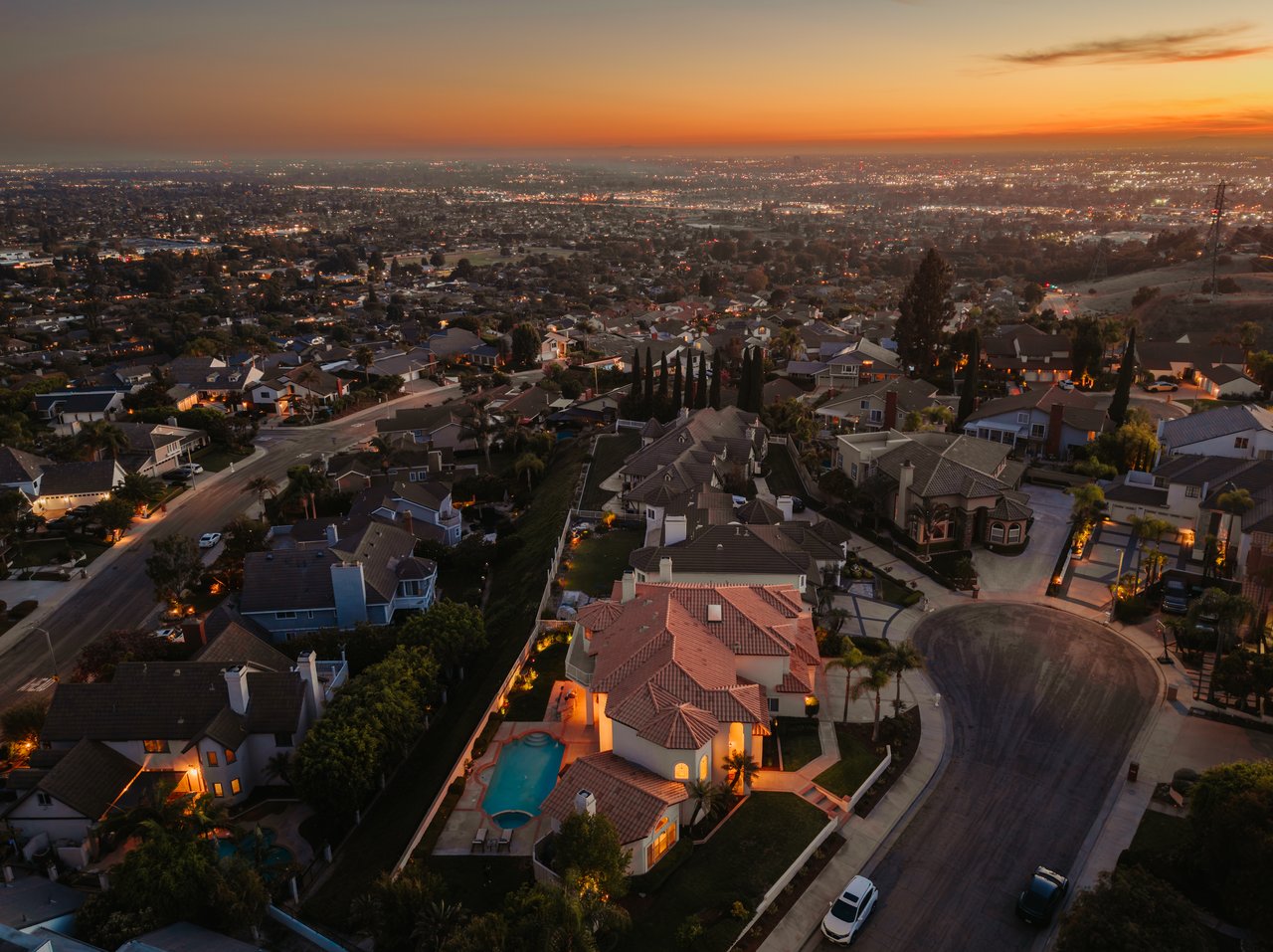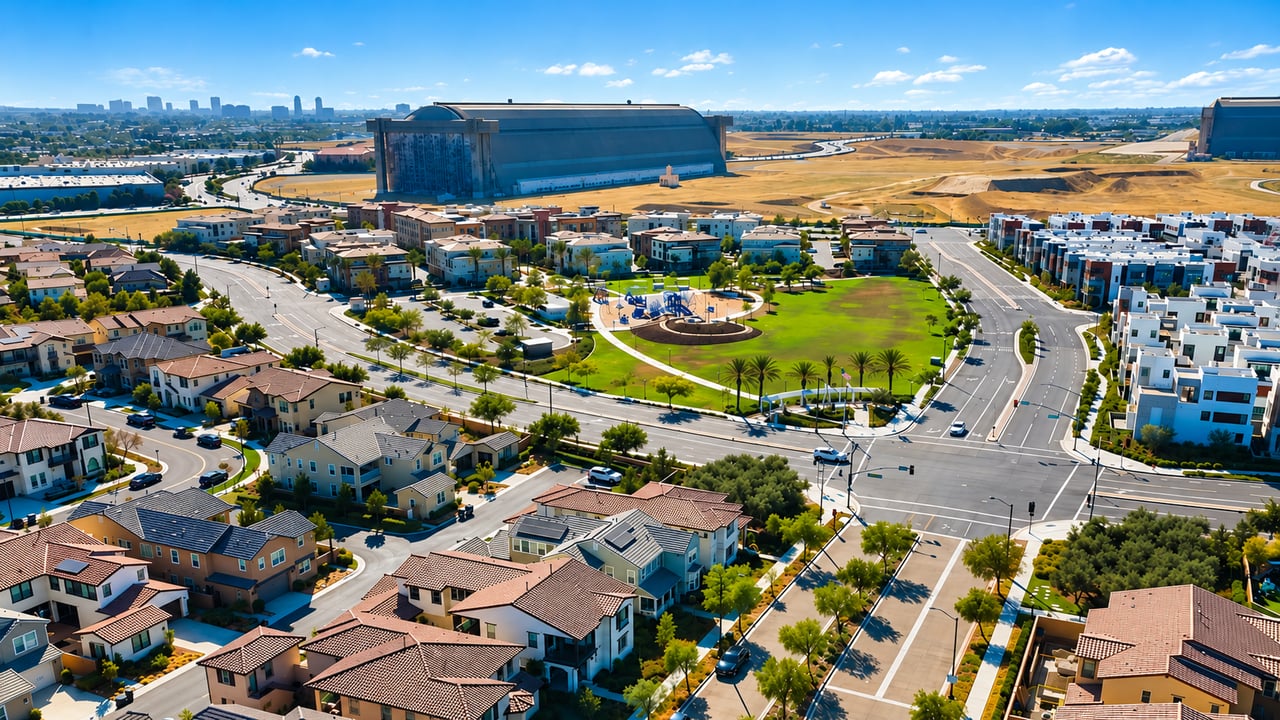
The Regal Edwards Anaheim Hills 14 closed in September 2022, and the building has stood empty at the west end of the Anaheim Hills Festival ever since. In March 2026 the City of Anaheim approved Shea Properties' plan to tear it down and build a four-story, 447-apartment building, with 45 units set aside for moderate-income households. No demolition date has been announced as of this week. The development agreement the city signed explains why. It lets the developer build on its own schedule and says plainly that the developer does not have to build at all. The agreement's developer is OTR, which owns the property, while Shea Properties applied for the project and would develop and run the apartments.
The council vote settled whether the project could happen. When it happens is a private decision, and the cosmetic upgrades to the rest of the shopping center wait on that same decision.
How a 4-3 vote became final approval
The approval took months and ran through several continued hearings. Here is the order of events in the city record:
- Sept. 22, 2022. The Regal Edwards Anaheim Hills 14 was scheduled to close, according to the Orange County Register.
- Nov. 17, 2025. The Planning Commission recommended approval, 6-1.
- Dec. 16, 2025, to March 3, 2026. The City Council continued its hearing from December to Jan. 13, then to Feb. 3, then to March 3. Public testimony closed on Jan. 13.
- March 3, 2026. The council approved the project 4-3. Mayor Ashleigh Aitken and Councilmembers Kristen Maahs and Natalie Meeks voted no. The city's announcement counted more than 40 speakers that night.
- March 24, 2026. The council adopted the two ordinances behind the project and, by a 7-0 vote, denied a request for a rehearing.
According to the March 24 council minutes, the City Attorney said Anaheim's rehearing process is a step that must come before anyone can sue, and that denying the request meets that requirement. The 7-0 vote closed the city's administrative process. It was not a change of position on the project.
Voice of OC reported that opponents raised evacuation and traffic concerns. Supporters argued for more housing and for spreading new development more evenly across the city. The Orange County Business Journal reported that Shea says this will be the first apartment project in Anaheim Hills in 10 years.
The sentence that sets the pace
The development agreement in the council's March packet sets the pace for the Festival over the next several years in one sentence:
"Notwithstanding anything to the contrary contained herein, Developer shall have no obligation to commence construction of the multi-family development described herein."
The same section says the developer may build "at such time and in such phases" as the agreement allows, "in the exercise of its subjective business judgment." In practice, the city has approved a building that the developer is allowed, but not required, to put up.
There is a clock, and it measures the developer's window, not a duty to build. The development agreement runs for an initial term of five years. It can be extended five more years if the developer gets a building permit for the apartment building before Oct. 1, 2029 and starts construction before the initial term ends. If the term runs out first, the agreement ends and has no further force, apart from any provisions written to survive it.
October 2029 is the date on the calendar. Until a permit is pulled, the empty theater is the expected state of things, not a sign the project has stalled.
What waits for the first shovel
This is the part that affects anyone who shops at the Festival every week. The city staff report summarizes the construction phasing in the agreement. Demolishing the cinema, building the apartments and improving the pedestrian link to the shopping center all fall inside the initial five-year term. Other cosmetic improvements to the Festival are due "within five years of the commencement of construction of the residential building."
| Piece of the plan | What starts the clock | Timing in the city documents |
|---|---|---|
| Building permit for the apartments | The developer's decision | Before Oct. 1, 2029 to keep the extension option |
| Theater demolition and apartment construction | The developer's decision | Within the initial five-year term, per the phasing exhibit, with no obligation to begin |
| Pedestrian connection to the shops | Apartment construction | Alongside the residential building |
| Cosmetic upgrades to the rest of the Festival | Apartment construction starting | Within five years after it begins |
So the refresh of a center built in 1992 depends on the same start date as the apartments. If the apartments take years to start, so does the refresh. The Orange County Business Journal reported that the 567,000-square-foot center is owned by OTR, part of the State Teachers Retirement System of Ohio, with Shea as developer, manager and operator of the apartments.
What stays, and what the plan opens to the public
The city said the 57,560 square feet of commercial space in the project area will remain as is, and named Target, Nordstrom Rack, Petco and 24 Hour Fitness among the businesses staying. The center's own directory also lists Vons, Hobby Lobby and Wood Ranch among its major tenants. The approved plans keep 13,310 square feet of the former theater's allowance for future commercial buildings elsewhere in the specific plan. They do not describe new retail inside the apartment building.
The Planning Commission report describes two outdoor spaces that would be open to everyone, not only tenants:
- A fenced dog park on Festival Drive, with decorative wrought-iron fencing, a large grass area, shaded seating, a dog fountain and pet waste stations.
- Bluff Park, along the northeast edge of the site, with a central lawn, perimeter gardens, seating and concrete walkways that connect to the shops.
Both would be privately maintained and open to the public.
The approved design has a 954-space garage. Resident parking on the upper and underground levels is gated, and guest and retail parking on the first level is open. A 289-space surface lot stays in the project area. The main entrance uses an existing Festival Drive driveway, a new resident-only garage entrance is added on Festival Drive, and the center's other driveways stay as they are. The Planning Commission also added a condition requiring a Parking Management Plan to balance resident, guest and shopper parking. These are the approved designs. How access will work during construction has not been published.
The signals that will mean the clock is running
Because the contract leaves timing to the developer, the first public signs of change will be paperwork and site activity, not another council vote:
- A demolition or building permit for 8020 E. Santa Ana Canyon Road, the address the Orange County Business Journal gives for the site.
- Fencing or equipment around the roughly 62,000-square-foot theater building.
- A Parking Management Plan, which the approval requires.
- Any filing in court, since the March 24 denial completed the step the City Attorney described as a prerequisite to a lawsuit.
None of these has been announced as of publication. Until one is, the center works the way it has since 2022, with its stores open and the theater at the west end dark.
The Anaheim Hills Festival is holding its free Halloween Boo-Nanza on Saturday, Oct. 31, from 11 a.m. to 1 p.m. It has store-to-store trick-or-treating, a DJ, face painting, balloon twisting and photo spots, according to the center's event page, which is the place to confirm details before you go.
If you own a home near the Festival and wonder how a construction window running toward 2029 affects your own plans, we're glad to work through it with you, from timing to how your home is presented if you decide to list. Request a design‑forward market consultation with Real Estate by Cindi.